Jun 26, 2026Guides
How to Choose the Right Thermal Transfer Ribbon for Your Barcode Printer – Wax vs Wax/Resin vs Resin
Wrong ribbon leads to smudged barcodes and wasted money. Learn the differences between wax, wax/resin, and resin – and how to pick the right one for your labels and printer.
How to Choose the Right Thermal Transfer Ribbon for Your Barcode Printer – Wax vs Wax/Resin vs Resin
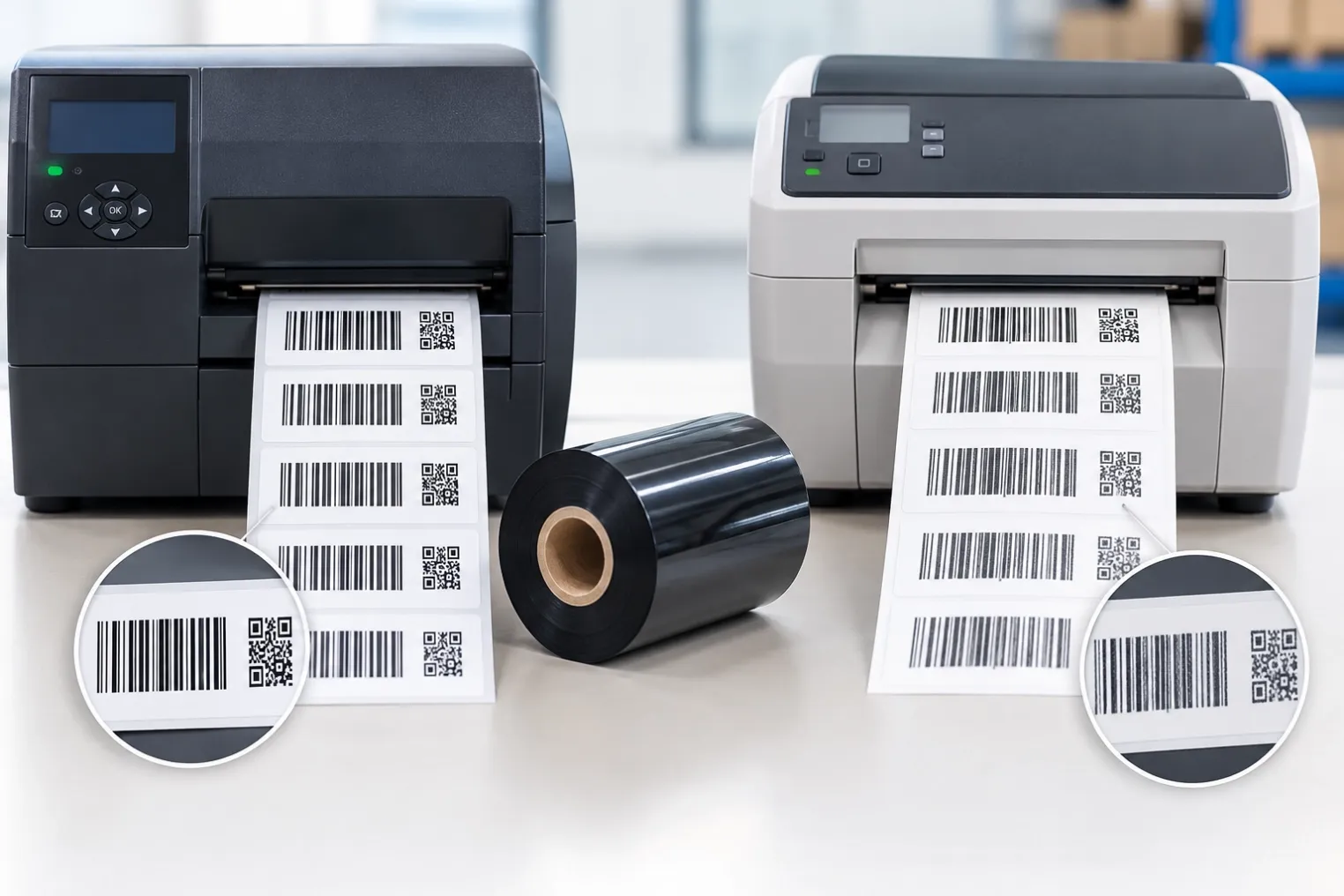
You’ve got the right barcode printer and the perfect label stock – but if you pick the wrong ribbon, the barcode will smudge, scratch off, or fail in harsh conditions.
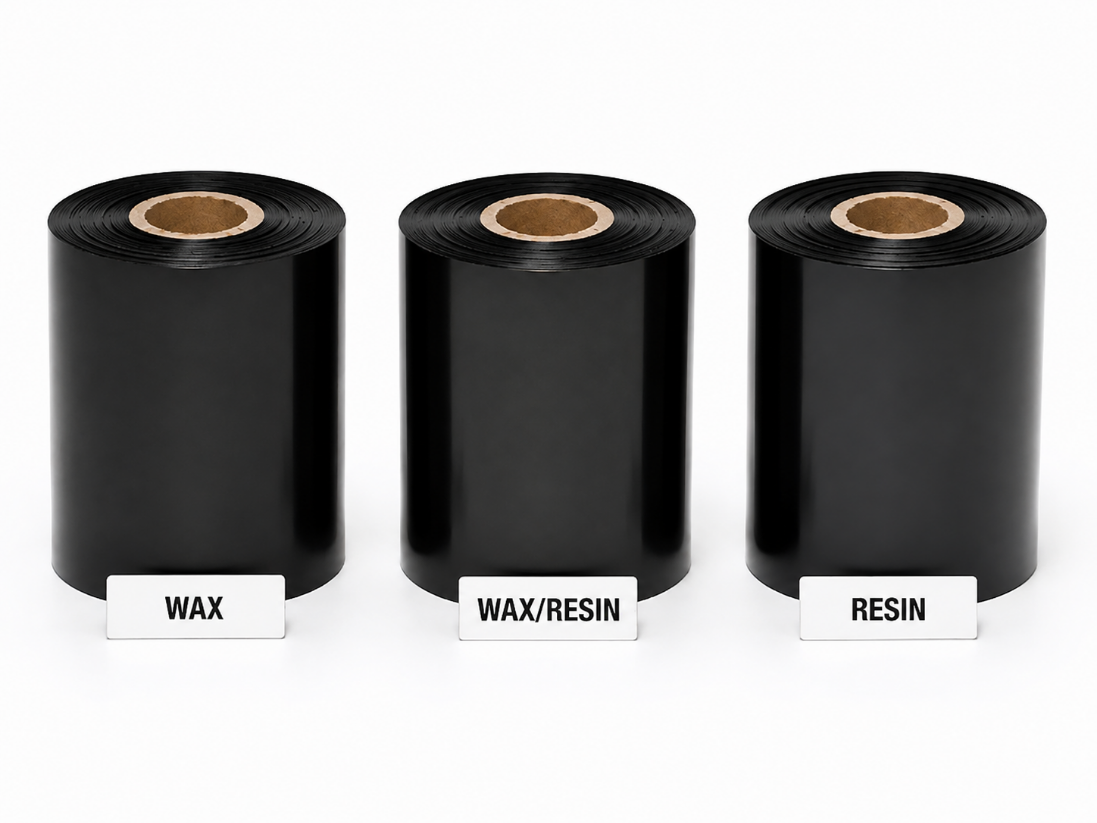
Thermal transfer ribbons come in three main formulations: wax, wax/resin (semi‑synthetic), and resin. Each has a different balance of cost, durability, and print quality.
In this guide, I’ll explain how each ribbon works, when to use it, and give you a simple decision framework – so you never waste money on the wrong roll again.
1. How Thermal Transfer Ribbons Work
A thermal transfer ribbon consists of a thin film coated with ink (wax, resin, or a blend). The printer’s thermal printhead melts the ink onto the label surface. The ink cools and bonds to the material.
Because the ink is physically transferred, you get durable, scannable barcodes that last much longer than direct thermal or inkjet prints – but only if the ribbon chemistry matches your label material and environment.
2. Wax Ribbon – Economy for Paper Labels
What it is:
Wax ribbon is the oldest and most affordable type. The ink is mostly wax with a small amount of resin for adhesion.
Best for:
- Uncoated paper labels (standard shipping labels, retail price tags)
- Indoor, dry environments
- Short‑term applications (weeks to a few months)
Advantages:
✅ Lowest cost per roll
✅ Low print energy – extends printhead life
✅ Good print quality on smooth paper
Disadvantages:
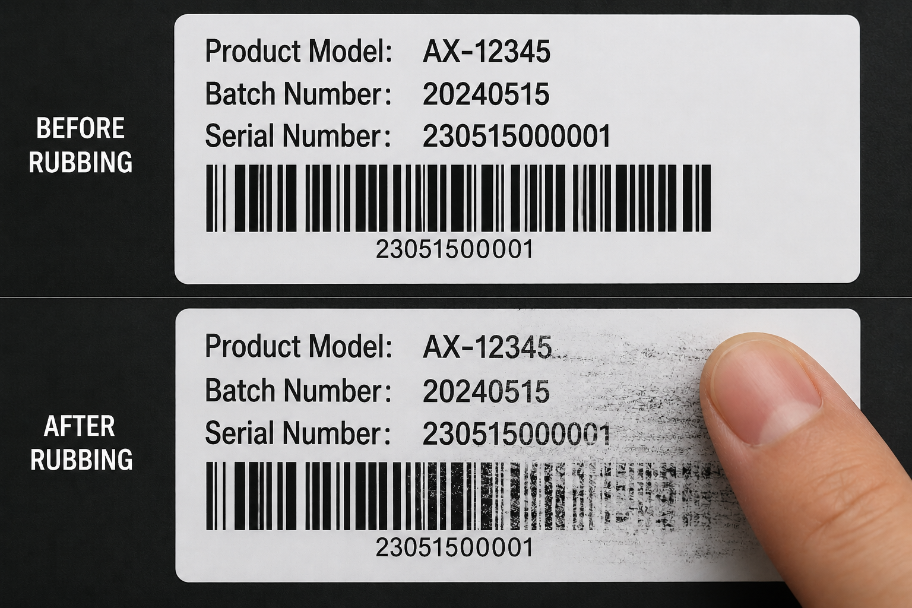
❌ Poor scratch and smudge resistance
❌ Not suitable for synthetic labels (PET, PP, PE)
❌ Fails in heat, moisture, or chemicals
Example use cases:
- Cardboard box labels for dry storage
- Shelf labels in retail stores
- Temporary asset tags indoors
Use wax ribbon when you need the cheapest possible label for paper and the environment is clean, dry, and room‑temperature.
3. Wax/Resin (Semi‑Synthetic) Ribbon – The All‑Rounder
What it is:
A blend of wax and resin – typically 50–70% wax, 30–50% resin. This gives better durability than wax while keeping cost reasonable.
Best for:
- Coated paper and matte synthetic labels (PET, PP)
- Logistics, warehousing, and light industrial use
- Applications that need scratch resistance but not extreme chemicals
Advantages:
✅ Much better scratch and smudge resistance than wax
✅ Works on both paper and basic synthetic labels
✅ Moderate cost – good value for most businesses
✅ OK for outdoor use (short term) and mild moisture
Disadvantages:
❌ Not resistant to strong solvents (acetone, MEK, toluene)
❌ Not suitable for high heat (above 80°C)
❌ May not bond well to glossy synthetic surfaces
Example use cases:
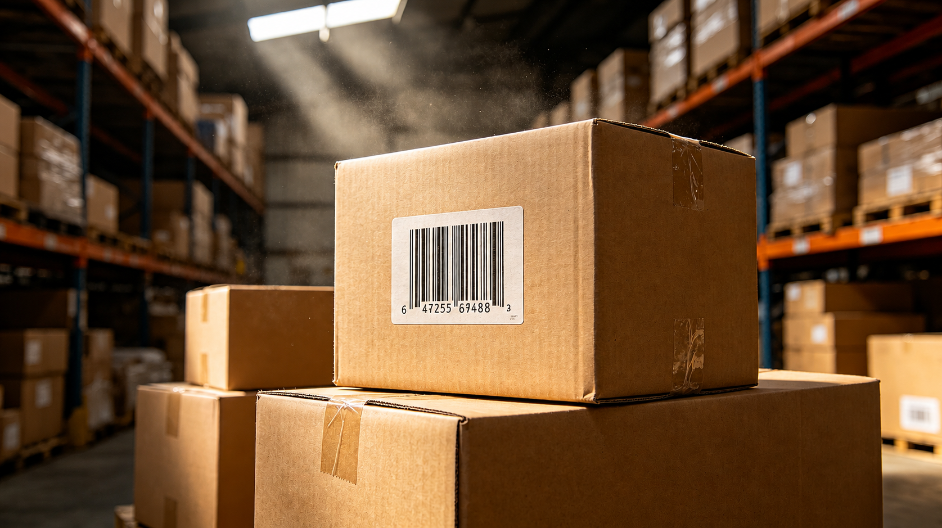
- Shipping labels on plastic totes or poly bags
- Barcode labels on warehouse racks (occasional handling)
- Product labels on electronics housings (not for reflow)
Choose wax/resin when you need better durability than wax but don’t require full chemical or high‑heat resistance – it’s the sweet spot for most industrial logistics.
4. Resin Ribbon – Maximum Durability for Harsh Environments
What it is:
Resin ribbon contains almost no wax – it’s made of hard, cross‑linked polymers. It requires higher print energy but provides the toughest bond.
Best for:
- Synthetic labels: PET, PI (polyimide), PP, PE, vinyl
- Extreme environments: chemicals, solvents, high heat, outdoor UV, abrasion
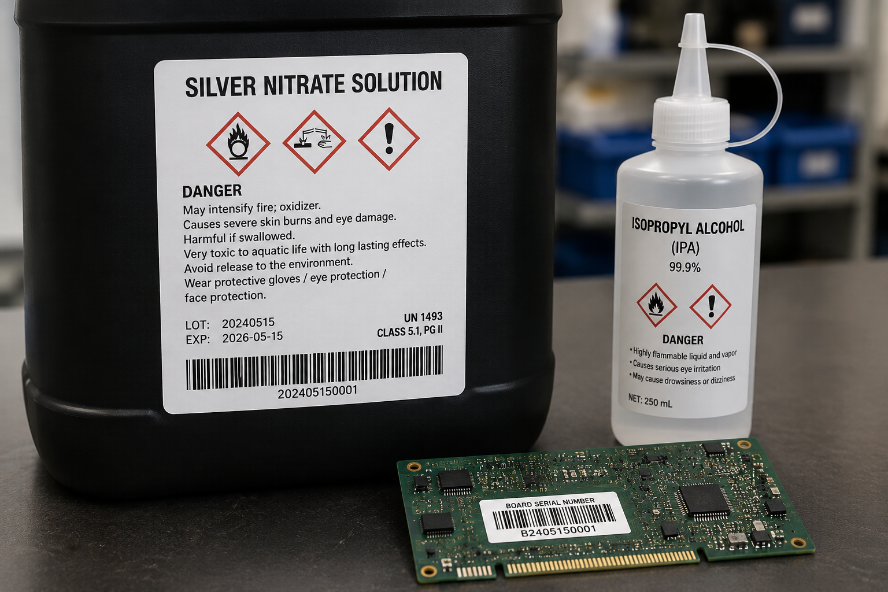
- Long‑term asset tracking, automotive under‑hood, PCB reflow soldering
Advantages:
✅ Extremely chemical resistant (acetone, toluene, MEK, acids)
✅ Withstands high temperatures (up to 150°C after printing)
✅ Outstanding scratch and abrasion resistance
✅ Bonds to difficult surfaces (glass, metal, low‑energy plastics)
✅ Barcode readability lasts years outdoors
Disadvantages:
❌ Higher cost per roll (often 2–3× wax)
❌ Requires higher print energy – can shorten printhead life if not adjusted
❌ Overkill for simple paper labels
Example use cases:
- PCB tracking labels through reflow soldering (with PI label)
- Chemical drum labels exposed to solvent wipe‑downs
- Cryogenic labels in liquid nitrogen (-196°C)
- Outdoor equipment labels (UV + rain)
Spec resin ribbon when your labels must survive aggressive chemicals, high heat, or outdoor weathering – the extra cost pays off in avoided relabeling.
5. Quick Comparison Table
Feature | Wax | Wax/Resin | Resin |
|---|---|---|---|
Best for label material | Uncoated paper | Coated paper, matte PET/PP | Synthetic (PET, PI, PP, PE) |
Scratch resistance | Low | Medium | High |
Chemical resistance | None | Mild solvents | Strong solvents, acids |
Heat resistance (after print) | ~40°C | ~80°C | ~150°C (special up to 300°C) |
Print energy required | Low | Medium | High |
Relative cost | $ | $$ | $$$ |
Typical environment | Dry indoor | Warehouse, light industrial | Factory, lab, outdoor, extreme |
6. How to Choose – A Simple Decision Framework
Ask yourself four questions:
1. What label material are you printing on?
- Uncoated paper → Wax ribbon (cheapest) or Wax/Resin (if you need a little more durability).
- Coated paper or matte synthetic (PET/PP) → Wax/Resin or Resin (test both).
- Glossy PET, PI, PE, or vinyl → Resin ribbon only. Wax/resin will likely fail.
2. What environment will the label face?
- Clean, dry, room temperature → Wax is fine.
- Warehouse with dust, mild handling, occasional moisture → Wax/Resin.
- Outdoor, chemicals, heat (>50°C), or repeated wiping → Resin.
3. How long does the label need to last?
- Weeks → Wax
- Months → Wax/Resin
- Years → Resin
4. What printer model do you have?
- Most industrial printers (Zebra, Honeywell, Sato, TSC) can run all three – but resin needs higher darkness (25–30%) and slower speed (2–4 ips).
- Desktop printers (e.g., Zebra GK series) may lack the energy for resin – test first.
💡 Pro tip: Always ask your ribbon supplier for a free 1‑meter sample. Test it on your actual label material and printer before buying full rolls.
7. Common Mistakes to Avoid
- Using wax on synthetic labels – The ink will not bond; it will wipe right off.
- Using resin on paper – Works, but it’s wasted money. Wax/resin is sufficient.
- Assuming resin is always best – For dry, short‑term paper labels, resin adds no value and costs more.
- Not adjusting printer settings – Resin requires higher energy and lower speed; otherwise print is light and scratches off.
8. Summary & Next Steps
- Wax = paper labels, dry indoor, lowest cost, short life.
- Wax/Resin = coated paper or matte synthetic, warehouses, good value.
- Resin = tough synthetics, extreme environments, highest durability, highest cost.
Still not sure? Send us your printer model and label material – we’ll recommend the exact ribbon type and send a free sample for you to test.