Jun 26, 2026Guides
5 Common Mistakes First-Time Buyers Make When Purchasing Industrial Labels
Avoid the 5 most common mistakes first-time buyers make when purchasing industrial labels, including choosing the wrong material, adhesive, ribbon, and printing method.
5 Common Mistakes First-Time Buyers Make When Purchasing Industrial Labels
Industrial labels may seem simple at first glance, but choosing the wrong label material, adhesive, or printing solution can lead to serious operational problems.
For first-time buyers, it is common to focus only on price while overlooking critical factors such as environmental conditions, ribbon compatibility, durability requirements, and application surfaces.
The result?
- Barcode scanning failures
- Labels falling off
- Smudged printing
- Frequent re-labeling
- Production delays
- Increased long-term costs
In this guide, we will explain the five most common mistakes companies make when purchasing industrial labels for the first time — and how to avoid them.
Why Choosing the Right Industrial Label Matters
Industrial labels are used in demanding environments such as:
- Warehousing and logistics
- Manufacturing
- Electronics
- Chemical industries
- Medical laboratories
- Automotive production
- Cold-chain storage
Unlike ordinary office labels, industrial labels must often withstand:
- Heat
- Chemicals
- Moisture
- Abrasion
- UV exposure
- Frequent handling
- Extreme temperatures
Selecting the wrong label solution can reduce operational efficiency and increase hidden replacement costs.
Mistake #1: Choosing Labels Based Only on Price
One of the biggest mistakes first-time buyers make is selecting the cheapest label option available.
Although paper labels usually have lower upfront costs, they may fail quickly in industrial environments.
Common issues include:
- Torn labels
- Fading barcodes
- Smudged printing
- Adhesive failure
- Moisture damage
In many cases, the cost of re-labeling, labor, and operational disruption becomes much higher than the initial savings.
Why Total Cost Matters More Than Unit Price
Instead of focusing only on label price per roll, buyers should evaluate:
- Label lifespan
- Replacement frequency
- Printing durability
- Scanning reliability
- Downtime risk
- Labor costs
For example, durable PET synthetic labels may cost more initially but often provide significantly lower total operating costs.
Related reading: Why Durable Synthetic Labels Are More Cost-Effective Than Paper Labels in Warehousing and Logistics
Mistake #2: Choosing the Wrong Label Material
Different industrial environments require different label materials.
Many first-time buyers assume all labels perform similarly, but this is not true.
Using the wrong material can lead to rapid label failure.
Common Industrial Label Materials
Paper Labels
Best for:
- Short-term indoor applications
- Low-cost shipping labels
- Temporary identification
Limitations:
- Poor water resistance
- Weak tear resistance
- Limited durability
PET Labels (Polyester)
Best for:
- Industrial barcode labels
- Asset tracking
- Electronics
- Warehouse shelves
Advantages:
- Excellent durability
- High temperature resistance
- Chemical resistance
- Strong abrasion resistance
PP Labels (Polypropylene)
Best for:
- Logistics
- Retail packaging
- General warehouse labeling
Advantages:
- Flexible
- Water resistant
- More economical than PET
PI Labels (Polyimide)
Best for:
- PCB manufacturing
- Electronics
- High-temperature environments
Advantages:
- Excellent heat resistance
- Suitable for SMT processes
- Resistant to soldering temperatures
Mistake #3: Ignoring Adhesive Requirements
The label material itself is important, but adhesive selection is equally critical.
Many buyers choose labels without considering the application surface or environmental conditions.
This often leads to labels peeling off too early.
Questions Buyers Should Ask
Before purchasing industrial labels, consider:
- Will the label be used indoors or outdoors?
- Is the surface metal, plastic, cardboard, or curved?
- Will the label face moisture or chemicals?
- Is the environment hot or cold?
- Is permanent or removable adhesive needed?
Common Adhesive Problems
Labels Falling Off in Cold Storage
Standard adhesives may fail in freezer environments.
Cold-chain logistics usually require freezer-grade adhesives.
Labels Not Sticking to Rough Surfaces
Some surfaces require stronger high-tack adhesives.
Examples include:
- Textured plastics
- Powder-coated metals
- Rough cartons
Adhesive Residue Issues
In some applications, removable adhesives are preferred to avoid residue during removal.
Selecting the correct adhesive is essential for long-term label performance.
Mistake #4: Using the Wrong Thermal Transfer Ribbon
Many first-time buyers focus only on labels and ignore ribbon compatibility.
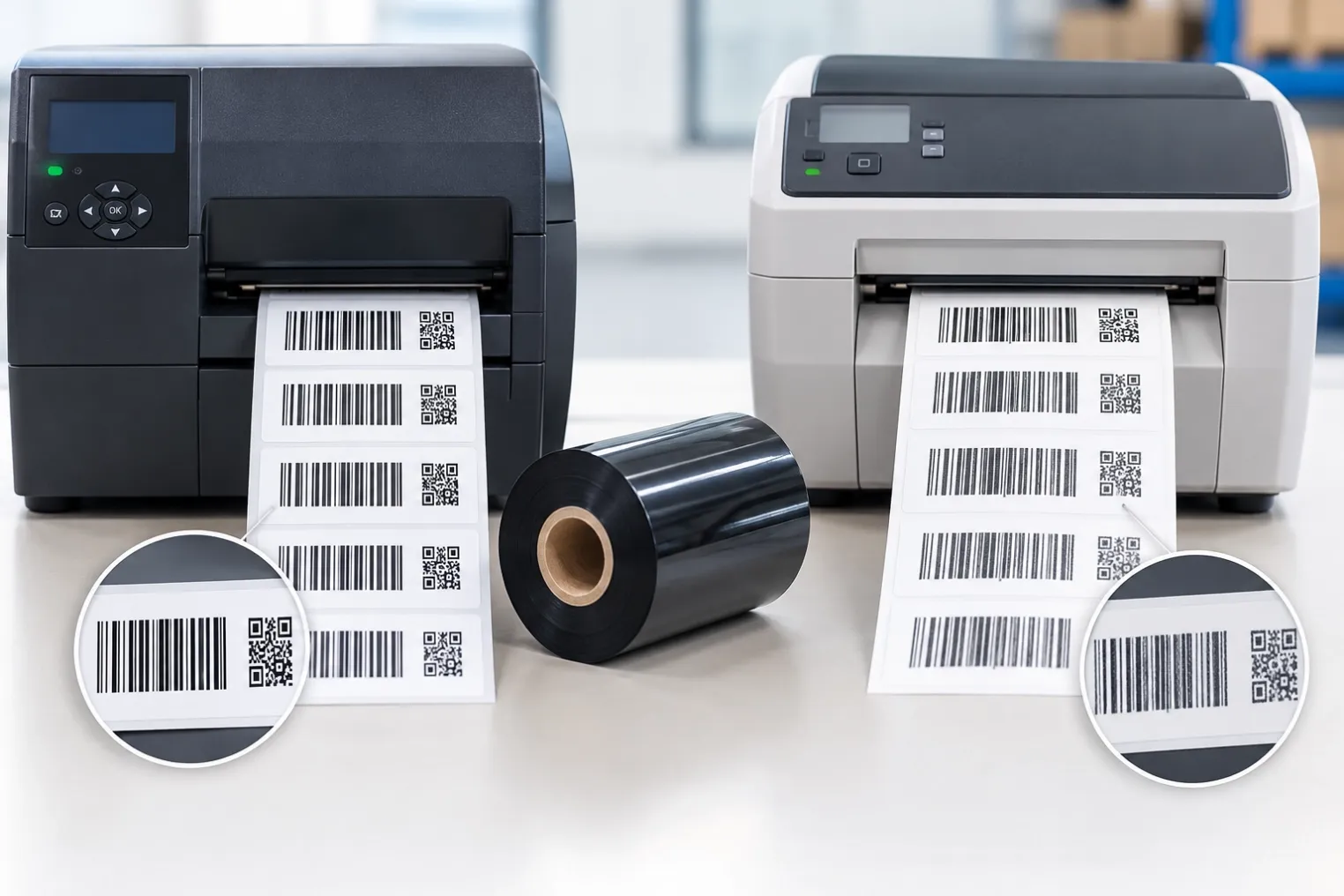
However, the thermal transfer ribbon plays a major role in print durability.
Even high-quality labels can fail if paired with the wrong ribbon.
The Three Main Ribbon Types
Wax Ribbon
Best for:
- Paper labels
- Short-term applications
Advantages:
- Low cost
- Good print darkness
Limitations:
- Poor abrasion resistance
- Limited durability
Wax/Resin Ribbon
Best for:
- PP labels
- Medium durability requirements
Advantages:
- Better durability than wax
- Cost-effective balance
Resin Ribbon
Best for:
- PET labels
- Chemical resistance
- High-temperature environments
- Long-term barcode durability
Advantages:
- Excellent scratch resistance
- Solvent resistance
- Industrial-grade performance
Mistake #5: Not Testing Labels Before Bulk Orders
Another common mistake is placing large orders without application testing.
Even if a label specification looks correct on paper, real-world performance may differ depending on:
- Printer settings
- Surface conditions
- Environmental exposure
- Ribbon compatibility
- Storage conditions
Why Sample Testing Is Important
Testing helps verify:
- Adhesion performance
- Print quality
- Barcode readability
- Durability
- Chemical resistance
- Temperature resistance
A small sample test can prevent expensive purchasing mistakes later.
What Should Be Tested?
Before bulk purchasing, buyers should test labels under actual operating conditions.
Recommended tests include:
Abrasion Test
Rub the printed label surface to evaluate scratch resistance.
Chemical Resistance Test
Expose the label to solvents or cleaning chemicals.
Temperature Test
Check performance under high heat or freezer conditions.
Barcode Scan Test
Verify scanning reliability after handling and storage.
Additional Tips for First-Time Industrial Label Buyers
Work With Experienced Suppliers
An experienced industrial label supplier can recommend:
- Suitable materials
- Compatible ribbons
- Adhesive types
- Printing solutions
- Cost optimization options
This reduces trial-and-error costs.
Consider Long-Term Scalability
As your business grows, labeling requirements may become more demanding.
Choose label solutions that can support:
- Automation
- High-volume printing
- Warehouse scanning systems
- International logistics requirements
Verify Printer Compatibility
Always confirm label compatibility with your printing equipment.
Common industrial printer brands include:
- Zebra
- TSC
- Honeywell
- SATO
- Toshiba TEC
Incorrect label or ribbon specifications may cause printing problems.
Frequently Asked Questions
What is the best label material for warehouse applications?
PET and PP synthetic labels are commonly recommended for warehouse durability and barcode performance.
Are paper labels suitable for industrial use?
Paper labels are suitable for short-term indoor applications but may fail in harsh industrial environments.
Which ribbon provides the best durability?
Resin ribbons provide the highest durability and chemical resistance.
Why do labels peel off?
Possible reasons include:
- Incorrect adhesive
- Dirty surfaces
- Cold temperatures
- Moisture exposure
- Surface incompatibility
Should I test labels before ordering?
Yes. Testing samples under real operating conditions is strongly recommended before large-volume purchases.
Conclusion
Purchasing industrial labels involves much more than simply choosing a size or price.
First-time buyers often underestimate the importance of:
- Material selection
- Adhesive compatibility
- Ribbon matching
- Environmental durability
- Product testing
Avoiding these common mistakes can help businesses improve barcode reliability, reduce operational disruptions, and lower long-term labeling costs.
Choosing the right industrial label solution from the beginning can save both time and money.
Call to Action
Looking for reliable industrial labels and thermal transfer ribbons for your application?
We supply:
- PET labels
- PP labels
- PI high-temperature labels
- Freezer-grade labels
- Resin ribbons
- Wax/resin ribbons
- Custom industrial barcode labels
with OEM/ODM support for global B2B customers.