Jun 26, 2026Guides
What Is a Chemical Resistant Label – And When Do You Need One?
Labels that resist acetone, MEK, toluene, and acids. Learn what makes them different, when standard labels fail, and how to choose the right one.
What Is a Chemical Resistant Label – And When Do You Need One?
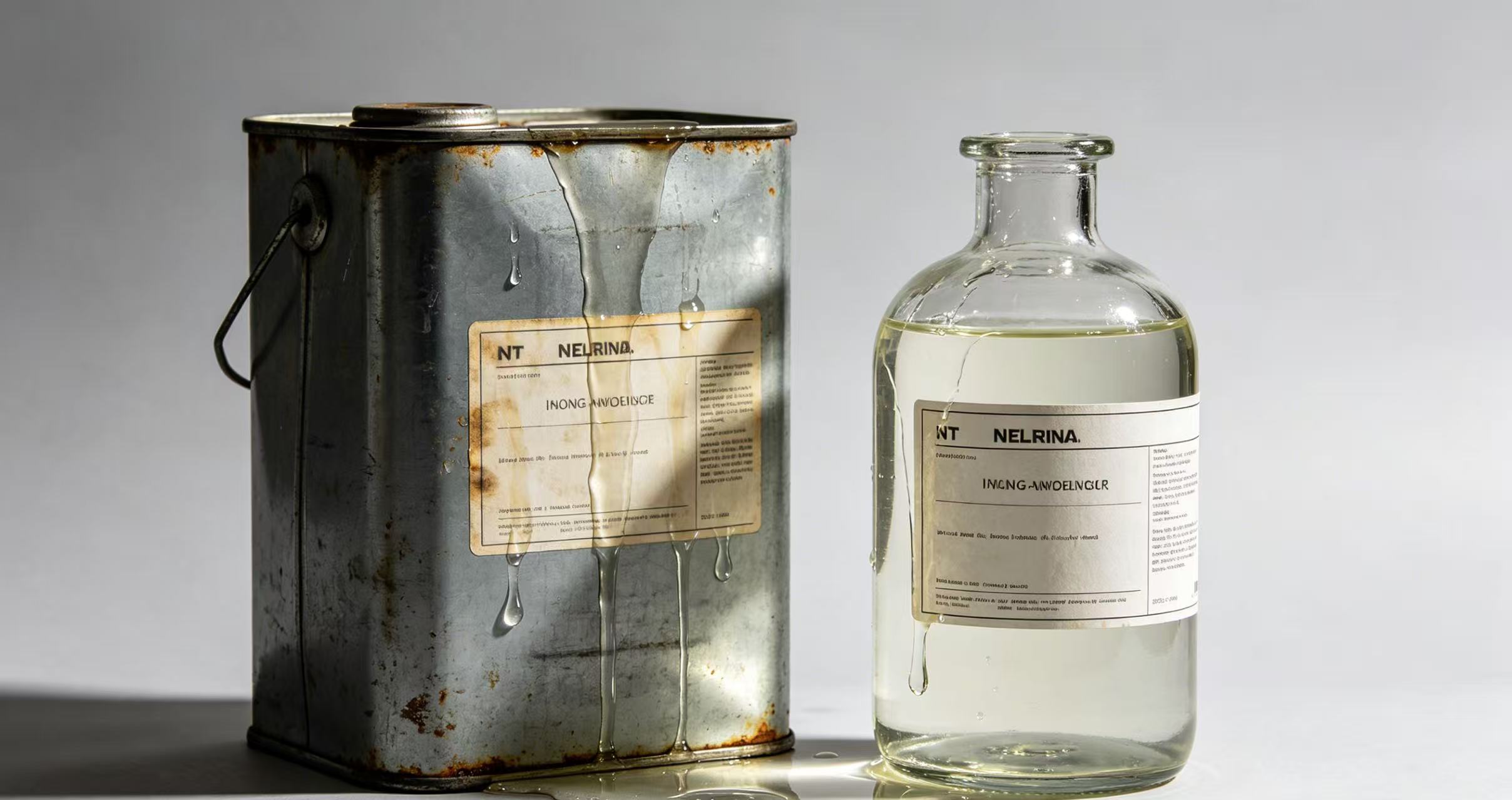
You’ve printed a perfect barcode, applied it to a chemical drum, and three days later it’s smeared, lifting at the edges, or completely dissolved. Sound familiar?
Ordinary labels – even standard PET or paper – are not designed to withstand aggressive solvents like acetone, MEK, toluene, or strong acids. That’s where chemical resistant labels come in.
In this guide, I’ll explain what makes a label chemically resistant, which chemicals cause failure, and how to decide whether you need one – plus a simple selection framework to avoid costly relabeling.
1. What Makes a Label Chemically Resistant?
A label’s chemical resistance comes from three components working together:
- Facestock (the printable surface) Standard paper or basic PET will absorb or degrade when exposed to solvents. Chemical resistant labels use:
- Specialty coated PET (polyester) with a solvent‑barrier layer, or
- PI (polyimide) for extreme chemical + heat environments.
- Adhesive The glue must not dissolve or lose bond strength. Look for cross‑linked acrylic adhesives or modified silicone adhesives that resist solvent penetration.
- Printing ribbon Even the best facestock is useless if the ink wipes off. Resin ribbon is mandatory – wax/resin will fail under solvent exposure.
When all three are optimised, the label can survive direct contact with aggressive chemicals without smearing, lifting, or delaminating.
2. Common Chemicals That Damage Standard Labels
Here are typical industrial chemicals that will ruin a non‑protected label:
Chemical | Effect on standard labels |
|---|---|
Acetone | Dissolves most facestocks, smears ink instantly |
MEK (methyl ethyl ketone) | Similar to acetone, very aggressive |
Toluene / Xylene | Swells and softens PET, removes print |
Ethyl acetate | Common in paints and adhesives – attacks many labels |
Strong acids (H₂SO₄, HCl) | Degrades paper and some adhesives |
Strong bases (NaOH) | Can saponify adhesives, cause edge lifting |
Isopropyl alcohol (IPA) | Mild but can still smear wax/resin prints |
Even “mild” solvents like IPA will eventually smear a wax/resin printed label. For any chemical contact, resin ribbon + chemical‑grade facestock is required.
3. When Do You Need a Chemical Resistant Label?
You need a chemical resistant label if your label will be directly exposed to any of the above chemicals – even occasionally. Common scenarios include:
- Chemical drums & IBC totes – Secondary containment labels, GHS hazard labels, batch tracking.
- Laboratory reagent bottles – Solvent, acid, or base containers that are handled daily.
- Automotive fluids – Brake fluid, engine oil, coolant, fuel – oil and solvents can attack labels.
- Paint & coating containers – Toluene, xylene, MEK‑based products.
- Pharmaceutical / cleanroom – Frequent wiping with IPA or other disinfectants.
- Aerospace & defense – Labels exposed to hydraulic fluids, jet fuel, de‑icing fluids.
- Any GHS‑labeled container – Compliance often requires labels that last the container’s lifetime.
Rule of thumb: If the container holds a chemical that has a hazard pictogram (flammable, corrosive, health hazard), assume you need a chemical resistant label.
4. How to Identify a Chemical Resistant Label
Not every “PET” label is chemical resistant. Here’s what to check:
- Material description: Look for “chemical resistant PET”, “solvent‑proof”, or “PI” (polyimide). Generic white PET is not enough.
- Adhesive spec: “Permanent acrylic” is good; “cross‑linked acrylic” or “modified acrylic” is better.
- Ribbon requirement: The supplier should explicitly recommend resin ribbon.
- Test data: Ask for ASTM D5402 (solvent rub test) results. A pass means the label survives specified solvents.
- Real‑world validation: Request a free sample and test it with your actual chemical and application method (wipe, immersion, spill).
5. Comparison Table – Standard vs Chemical Resistant Label
Property | Standard PET Label | Chemical Resistant Label |
|---|---|---|
Facestock | Plain PET | Speciality coated PET or PI |
Adhesive | General purpose acrylic | Cross‑linked acrylic / silicone |
Recommended ribbon | Wax/resin or resin | Resin only |
Acetone resistance | Poor (smears within seconds) | Good (≥60 seconds rub test) |
MEK / Toluene resistance | Very poor | Good to excellent |
IPA resistance | Moderate (wax/resin may smear) | Excellent |
Temperature range | -20°C to +120°C | -40°C to +150°C (PET grade) |
Relative cost | $ – $$ | $$ – $$$$ |
Best for | Dry indoor, oils, light handling | Direct solvent contact, chemical drums |
6. Quick Selection Guide
Ask yourself:
- Which chemicals will touch the label?
- Only water, mild oil? → Standard PET may work.
- Acetone, MEK, toluene, acids? → Chemical resistant required.
- How will the label be exposed?
- Occasional wipe? → Chemical resistant recommended.
- Submersion or spill? → Must be chemical resistant.
- What is the container’s service life?
- Days/weeks? → You might risk standard.
- Months/years? → Absolutely chemical resistant.
- Do you need regulatory compliance (GHS, REACH)?
- Yes → Only certified chemical resistant labels.
Still unsure? Order a free sample of our chemical resistant label, test it with your actual solvent, and compare with a standard label. The difference will be obvious.
7. Common Misconceptions
❌ “All PET labels are chemical resistant.”
No. Plain PET resists oil and mild cleaners but fails quickly against acetone, MEK, or toluene. You need a specially coated or PI facestock.
❌ “Using a resin ribbon makes any label chemical resistant.”
No. Resin ribbon protects the print, but the facestock and adhesive can still dissolve or lift. All three components must be chemical‑grade.
❌ “Once a label passes a test, it will always work.”
Chemical resistance can vary by batch, application method, and concentration. Always validate with your specific chemical and process.
❌ “Chemical resistant labels are too expensive.”
Consider the cost of relabeling, product recall, or regulatory fines. For critical applications, the extra cost is negligible compared to the risk.
8. Conclusion & Next Steps
You need a chemical resistant label if:
- The label will contact acetone, MEK, toluene, strong acids/bases, or similar solvents.
- The container is stored for months or years.
- You require GHS or regulatory compliance.
What to look for:
- Coated PET or PI facestock
- Cross‑linked acrylic adhesive
- Resin ribbon printing
- Test data (ASTM D5402)
Still not sure? Send us your chemical name, concentration, and application method. We’ll recommend the right label and send 5–10 free samples for you to test in your own environment.