Aug 28, 2026Guides
How to Test Chemical Resistance of Labels – A Complete Guide to ASTM D5402
ASTM D5402 is the standard solvent rub test for assessing label and coating chemical resistance. Learn how it works, how to perform it, and how to interpret results for your application.
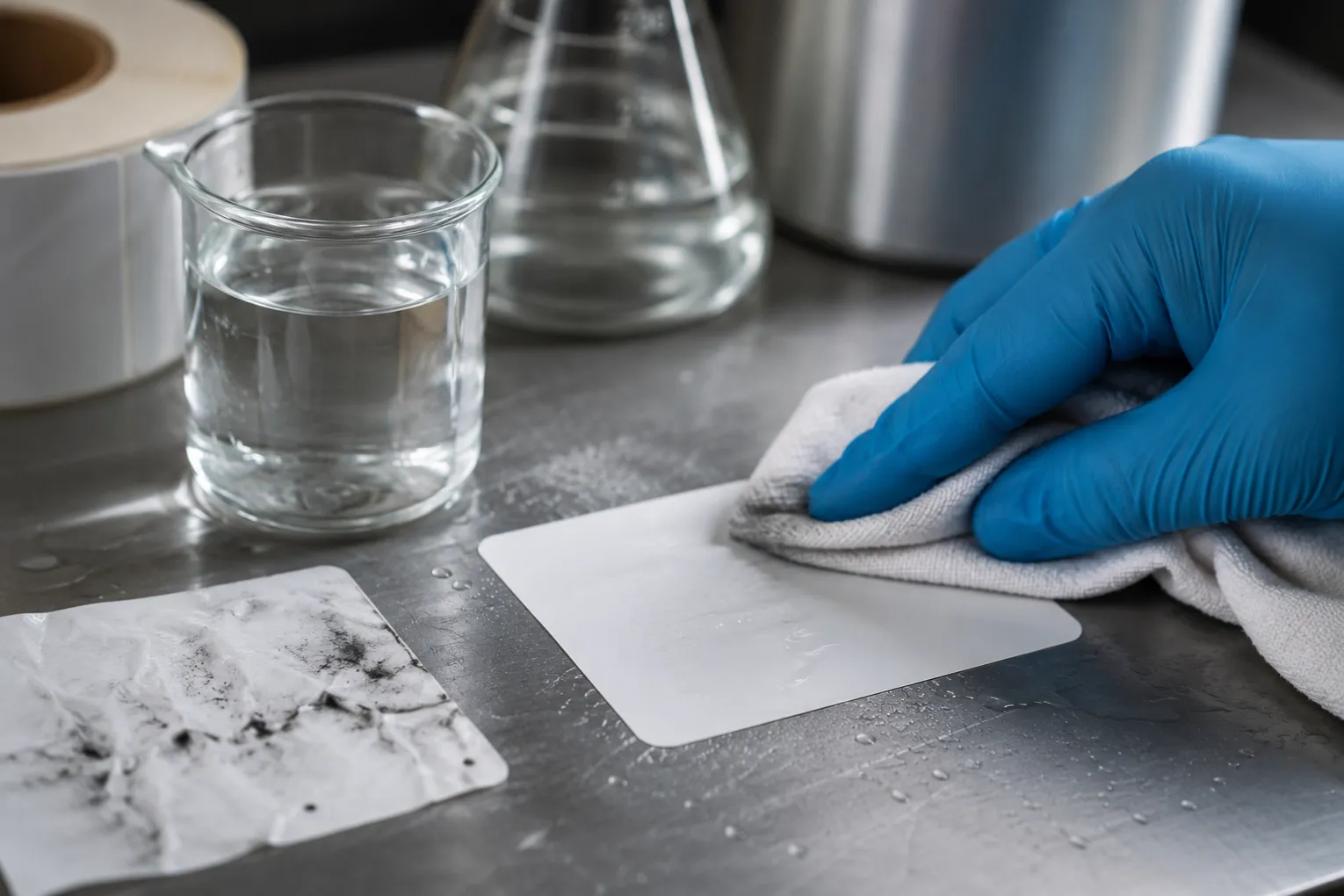
🧪 You have selected a label for chemical drums, laboratory bottles, or industrial containers. The supplier claims it is "chemical resistant." But how do you actually verify that claim before putting it into service?
The answer lies in a standardized test method called ASTM D5402 – the industry standard for assessing the solvent resistance of organic coatings using solvent rubs.
In this guide, I will explain what ASTM D5402 is, why it matters for industrial labels, how to perform the test, and how to interpret the results. By the end, you will know exactly how to verify that your labels can withstand the chemicals they will face.
For a general introduction to chemical resistant labels, see our guide to chemical resistant labels.
1. What Is ASTM D5402? 📋
ASTM D5402 is a standard practice published by ASTM International that describes a solvent rub technique for assessing the solvent resistance of an organic coating that chemically changes during the curing process.
The current active version is ASTM D5402-19(2024), confirmed in 2024. It has been the industry benchmark for solvent resistance testing since its original development.
Key Features of the Standard
Feature | Description |
|---|---|
Applicability | Organic coatings that cure chemically – epoxies, vinyl esters, polyesters, alkyds, urethanes |
Test method | Rubbing with a cloth saturated with the appropriate solvent |
Where it can be used | Laboratory, field, or fabricating shop |
What it does NOT specify | The solvent, number of double rubs, or expected test results |
Related standard | ASTM D4752 is preferred for ethyl silicate zinc-rich primers |
Why This Standard Matters for Labels
Industrial labels are essentially organic coatings applied to a substrate (facestock). The print (ink) and the protective coating on the label surface are both organic coatings that cure over time. ASTM D5402 provides a standardized way to measure:
- Whether the label print will smear when exposed to solvents
- Whether the label surface will degrade or dissolve
- Whether the label meets the chemical resistance requirements for its intended application
Important: ASTM D5402 is a practice, not a test method that specifies pass/fail criteria. The coating manufacturer (or label supplier) typically specifies the solvent, the number of double rubs, and the acceptable result.
2. Why Chemical Resistance Testing Is Critical for Labels 🧪
Labels in industrial environments face constant exposure to chemicals:
- Chemical drums – Acetone, MEK, toluene, xylene spills during filling and handling
- Laboratory bottles – Alcohol, acids, and solvent wipe-downs
- Automotive fluids – Oil, brake fluid, coolant, and fuel
- Pharmaceutical cleanrooms – Frequent IPA (isopropyl alcohol) disinfection
- Outdoor equipment – UV, rain, and chemical exposure
What Happens When Labels Fail
Failure Mode | Consequence |
|---|---|
Smearing | Barcodes become unreadable – scanning failures |
Edge lifting | Labels peel off – lost traceability |
Dissolving | Label face stock degrades – container becomes unlabelled |
Adhesive failure | Labels fall off – compliance violations |
The cost of failure: Regulatory fines (GHS, FDA), product recalls, lost traceability, and damaged reputation.
For high-durability applications where chemical resistance is critical, consider our Chemical & Solvent Resistant Label.
3. How the ASTM D5402 Test Works 🔬
The Basic Principle
A cloth is saturated with a specific solvent. The cloth is rubbed back and forth over the coating (label surface) using a double rub motion. One double rub consists of one forward stroke and one backward stroke.
The test continues until either:
- The coating shows signs of failure (breakthrough, softening, or smearing)
- A predetermined number of double rubs is reached without failure
What Affects Test Results
The time required to reach a specific level of solvent resistance can be influenced by:
Factor | Effect |
|---|---|
Temperature | Higher temperature accelerates curing and increases resistance |
Film thickness | Thicker coatings take longer to cure but may offer more resistance |
Air movement | Affects solvent evaporation during curing |
Humidity | Critical for water-borne or water-reactive coatings |
Critical note: Solvent resistance alone does not indicate full cure. Some coatings become solvent resistant before they are sufficiently cured for service. Always follow the manufacturer's recommended curing time.
4. Step-by-Step Guide to Performing ASTM D5402 on Labels 🛠️
Step 1: Select the Test Solvent
ASTM D5402 does not specify which solvent to use. The choice depends on:
- The chemicals the label will face in service
- The coating manufacturer's recommendation
Common Solvents | Typical Application |
|---|---|
Acetone | Aggressive solvent – tests maximum resistance |
MEK (Methyl Ethyl Ketone) | Common industrial solvent |
Toluene | Paint and coating industry |
Isopropyl Alcohol (IPA) | Pharmaceutical and cleanroom applications |
Xylene | Chemical and laboratory use |
The coating manufacturer may specify the solvent, the number of double rubs, and the specific test results needed.
Step 2: Prepare the Test Sample
- Print the label using the intended printing method and ribbon
- Allow the label to cure fully (follow manufacturer's recommended curing time)
- Apply the label to the intended substrate, or test the label face stock directly
- Ensure the surface is clean and dry
For label testing, we recommend testing both:
- The printed surface (ink/resin durability)
- The facestock (material integrity)
Step 3: Perform the Solvent Rub Test
- Saturate a clean, lint-free cloth with the selected solvent
- Place the cloth over your finger or a rub block
- Apply firm, consistent pressure
- Rub back and forth over the test area (one double rub = one forward + one backward stroke)
- Count the number of double rubs
- Inspect the test area at regular intervals
Step 4: Inspect and Record Results
Observation | Interpretation |
|---|---|
No change | Coating/pass – label meets or exceeds the required resistance |
Slight smearing | Marginal – may be acceptable for low-exposure applications |
Significant smearing | Failure – label will not survive chemical exposure |
Breakthrough (to substrate) | Failure – coating has been completely removed |
Softening or blistering | Failure – coating is degrading |
Step 5: Document and Compare
Record:
- Solvent used
- Number of double rubs to failure (or maximum achieved)
- Observations at each interval
- Date and environmental conditions
Compare results against:
- Supplier claims
- Industry requirements
- Competing products
5. How to Interpret ASTM D5402 Results 📊
What the Results Tell You
The number of double rubs a label survives before failure indicates its relative chemical resistance.
Double Rubs Survived | Resistance Level | Typical Application |
|---|---|---|
<10 | Low | Dry indoor, no chemical exposure |
10–50 | Moderate | Occasional mild solvent contact |
50–100 | Good | Regular solvent wipe-downs |
>100 | High | Direct solvent exposure, chemical drums |
>200 | Excellent | Aggressive chemicals, long-term exposure |
What the Results Do NOT Tell You
- Full cure – Solvent resistance can develop before full cure
- Resistance to other solvents – Each solvent must be tested separately
- Long-term durability – Accelerated aging tests (ASTM F1980) are needed for that
Pro tip: Always test with the actual solvent the label will contact in service. Testing with acetone may not predict resistance to toluene.
6. ASTM D5402 vs Other Chemical Resistance Tests ⚖️
Standard | Method | Best For |
|---|---|---|
ASTM D5402 | Solvent rub (manual) | Organic coatings, labels, inks |
ASTM D7835 | Mechanical rubbing machine | Coil coated metals, precision testing |
ASTM D1308 | Spot test | Screening common chemicals |
ASTM D4752 | MEK rub (specific) | Ethyl silicate zinc-rich primers |
ASTM D7932 | Extreme distribution environments | Printed pressure-sensitive labels |
When to Use Which
- ASTM D5402 – The go-to for most label chemical resistance testing. Simple, flexible, and widely accepted.
- ASTM D7835 – When you need mechanical consistency and precision.
- ASTM D1308 – Quick screening of multiple chemicals.
- ASTM D7932 – When you need a comprehensive specification for extreme environments.
7. Practical Tips for Label Chemical Resistance Testing 💡
Tip 1: Test After Full Cure
Many labels and coatings continue to cure for 24–72 hours after printing. Testing too early can give false failures. Follow the manufacturer's recommended curing time.
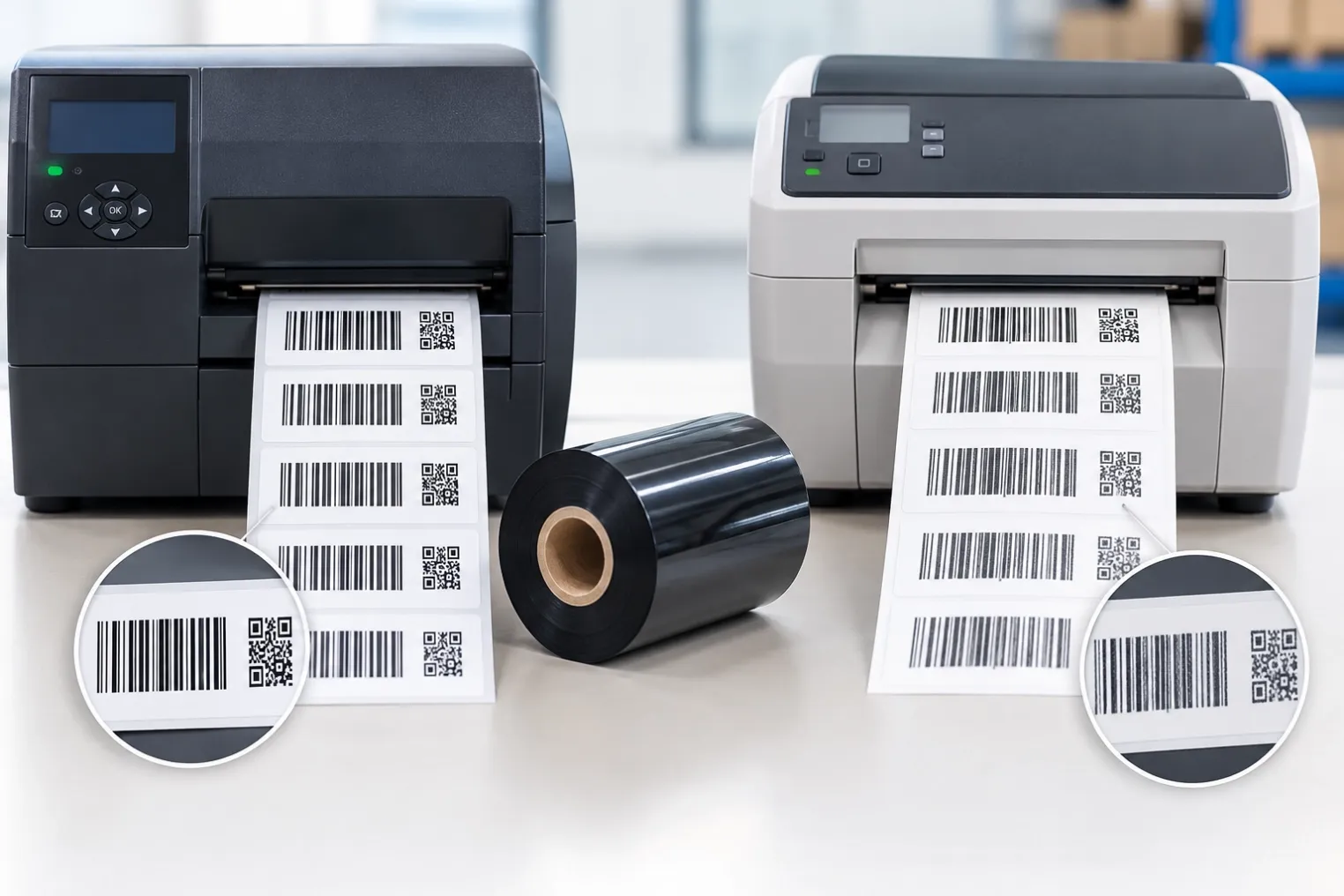
Tip 2: Use the Right Ribbon
Chemical resistance depends on both the label facestock and the printing ribbon. A chemically resistant facestock is useless if the ink smears.
For maximum chemical resistance, use a Resin Ribbon – resin ribbons cross-link during printing, creating a chemical-resistant print that withstands solvent exposure.
Tip 3: Test Multiple Samples
Variation can occur between batches or within a roll. Test at least 3 samples for reliable results.
Tip 4: Document Environmental Conditions
Temperature and humidity during curing and testing can affect results. Record these conditions for reproducibility.
Tip 5: Consult the Supplier's SDS
Before testing, consult the supplier's Safety Data Sheet for specific hazard information relating to the solvent used.
8. Common Mistakes to Avoid ❌
Mistake | Consequence |
|---|---|
Testing before full cure | False failure – label may pass after full curing |
Using the wrong solvent | Results do not reflect real-world exposure |
Inconsistent pressure | Results are not reproducible |
Not testing the printed area | Ink may fail even if facestock survives |
Assuming one solvent represents all | Each chemical must be tested separately |
Ignoring environmental conditions | Results cannot be compared across different conditions |
✅ Always follow the standard and document your test conditions for valid, comparable results.
9. When to Request ASTM D5402 Data from Your Supplier 📋
When evaluating chemical resistant labels, always ask your supplier:
- "Do you have ASTM D5402 test data for this label?"
- "Which solvents were tested and what were the results?"
- "What was the curing time before testing?"
- "Can you provide a test report with the batch?"
A reputable supplier should be able to provide this data. If they cannot, it may indicate that their labels have not been properly validated.
For our Chemical & Solvent Resistant Label, we provide ASTM D5402 test data upon request – contact us for specific solvent test results.
10. Conclusion & Next Steps 🎯
- ASTM D5402 is the industry standard for assessing solvent resistance of organic coatings – including industrial labels.
- The test involves rubbing with a solvent‑saturated cloth and counting double rubs until failure.
- Results are relative – the solvent, number of rubs, and pass/fail criteria are specified by the manufacturer.
- Always test with the actual solvent the label will face in service.
- Solvent resistance does not guarantee full cure – follow recommended curing times.
Need chemical resistant labels with verified ASTM D5402 performance? We offer chemical and solvent resistant labels tested against acetone, MEK, toluene, IPA, and more. Send us your chemical list and application requirements – we will recommend the right label and provide test data for your validation.