Jun 26, 2026Product-knowledge
High-Temperature PI Labels – What They Are and Why They Survive Reflow Soldering
What makes PI labels survive 260°C reflow soldering? Learn how polyimide works, when you need it, and how to choose the right one for PCB assembly.
Polyimide (PI) Labels for Reflow Soldering: The Complete Guide to High-Temp PCB Tracking
Your printed circuit boards have just passed through solder paste printing, pick-and-place, and now face the brutal heat of reflow soldering. The labels attached to them must survive peak temperatures of 260°C or more without shrinking, discoloring, or losing adhesion. If they fail, entire batches lose traceability—right when you need it most.
At FuYue Labels, we manufacture industrial labels and thermal transfer ribbons purpose-built for these exact conditions. In this guide, you’ll learn what makes polyimide (PI) labels the gold standard for PCB assembly, how to pair them with the right adhesive and ribbon, and how to avoid the most expensive labeling mistakes in SMT manufacturing.
1. What Is a PI Label? Understanding the Material
Polyimide is a high-performance polymer that maintains exceptional mechanical, thermal, and chemical stability across an enormous temperature range—from -269°C to over 400°C. In the labeling world, PI films are often referred to by the well-known DuPont brand name, Kapton®, but the terms “PI label” and “Kapton label” are used interchangeably within the industry.
PI labels are not just “heat-resistant”; they are dimensionally stable under thermal stress. That means they don’t shrink, wrinkle, or release outgassing chemicals when exposed to reflow soldering temperatures. This makes them fundamentally different from polyester (PET) labels, which begin to distort above 150°C, and paper labels, which simply carbonize.
If your application also involves extreme cold, you’ll find PI labels perform equally well in liquid nitrogen. In fact, we cover cryogenic labeling in depth in our complete guide to -80°C to -196°C label selection. PI is one of the very few materials that can handle both ends of the thermal spectrum.
2. Why Reflow Soldering Demands PI Labels
Reflow soldering isn’t just about a single peak temperature. A typical lead-free profile includes preheat, soak, reflow (peaking around 245–260°C), and cooling. The label must survive this entire journey, often multiple times if the board goes through double-sided assembly.
Here’s why PI is the material of choice for PCB identification:
- Unmatched Thermal Resistance: PI films easily withstand short-term exposure up to 400°C and continuous service temperatures above 260°C. This covers every common reflow and wave soldering process.
- Dimensional Stability: PI has a low coefficient of thermal expansion. The label won’t curl, lift at the edges, or introduce mechanical stress to nearby solder joints.
- Electrical Insulation: PI is naturally dielectric. You can place labels across circuit traces without risking short circuits, provided the label design respects clearance requirements.
- Chemical Inertness: Flux residues, cleaning solvents, and isopropyl alcohol won’t degrade a PI label or its print. This is vital for post-soldering board washes.
3. The Complete Label System: Face Stock, Adhesive, and Ribbon
A PI label is only as good as the system it belongs to. Three components must work together to survive reflow and remain scannable.
3.1 High-Temperature Adhesives
The polyimide film may withstand 400°C, but if the adhesive fails at 200°C, the label lifts. Standard acrylic adhesives soften and degrade, leaving sticky residue that can contaminate test pads and connectors.
For reflow solder labeling, you need a dedicated high-temperature adhesive. We recommend two categories:
- High-Temperature Acrylic Adhesives: Formulated specifically for PCB assembly, these adhesives deliver reliable adhesion on standard FR-4 boards, solder mask coatings, and metal surfaces. Many can handle short-term peaks up to 350°C without oozing or leaving residue. They strike the best balance between performance and cost for most SMT applications.
- Silicone Adhesives: When you need performance on difficult low-surface-energy substrates (e.g., PTFE boards, heavily conformal-coated assemblies) or the highest possible temperature tolerance, silicone adhesives excel. They remain flexible and tacky far beyond the limits of acrylics and are the premium choice for the most demanding electronics manufacturing.
Key selection criteria for adhesive:
- Does the label need to be removable after reflow, or will it be permanent?
- Is the board surface standard FR-4 or an exotic material?
- Will the assembly undergo multiple thermal cycles?
3.2 Matched Resin Thermal Transfer Ribbons
The printing ribbon is the most overlooked—and most frequently failed—part of a high-temperature label system. Wax and wax-resin ribbons cannot survive reflow. The wax component melts, causing the print to blur, smear, or vanish entirely.
Only all-resin ribbons are suitable for PI labels that will undergo soldering heat. However, not every resin ribbon works with every PI topcoat. The surface treatment of the PI film must match the ribbon’s chemistry to achieve a permanent bond.
A properly matched PI label + resin ribbon combination should deliver:
- Sharp, high-contrast barcodes (1D and 2D) after reflow
- Resistance to flux, alcohol, and board washes
- Durability through multiple thermal cycles without fading
As a manufacturer, we test every polyimide label we offer with our resin thermal transfer ribbons to guarantee performance. If you’re looking for a pre-validated pair, check our matched label-ribbon sets for electronics.
4. Application Quick-Reference Table
Use this table to narrow down the right configuration for your specific soldering process.
PCB Application | Solder Process & Peak Temp | Recommended Face Stock | Recommended Adhesive | Ribbon Type |
|---|---|---|---|---|
Standard SMT (lead-free) | Reflow, 245–260°C | Polyimide | High-temp acrylic | Premium resin |
Double-sided reflow | Two passes at 260°C | Polyimide | High-temp acrylic | Premium resin |
Wave solder / selective solder | Localized peak 280°C+ | Polyimide | High-temp acrylic or silicone | Premium resin |
High-reliability (aerospace, medical) | Multiple thermal cycles, extreme wash processes | Polyimide | Silicone | Super-grade resin |
Bare board / inner layer tracking | Lamination and cure cycles, 180–200°C for hours | Polyimide | High-temp acrylic | Resin |
Harsh environment final product | Long-term 200°C exposure | Polyimide | Silicone | Super-grade resin |
5. PI Label Selection Checklist
Before placing your order, confirm each of the following. These questions will surface hidden risks and help us recommend the best product.
- What is the maximum soldering peak temperature and dwell time? — Provide the full reflow profile if possible.
- What is the board surface finish? — ENIG, HASL, OSP, immersion silver? Different finishes can affect adhesion.
- Will the label be applied before or after solder paste? — Pre-solder application requires the label to survive flux and cleaning as well as heat.
- Is removability required? — Do you need clean, residue-free removal after reflow, or is the label permanent?
- What printer resolution are you using? — 300 dpi or 600 dpi affects barcode density; ensure your label and ribbon can resolve the smallest features.
- Are there any post-soldering cleaning processes? — Aqueous wash, solvent wash, plasma cleaning? The label must withstand all of them.
- Do you also need cryogenic performance? — Some boards are stored or tested at low temperatures after assembly. PI labels handle this seamlessly—learn more about cryo labels here.
6. Common Myths and Mistakes
Myth #1: “High-temperature PET labels work just as well for reflow.”
PET films can handle around 150°C max before dimensional changes begin. At 260°C, PET shrinks, warps, and can even melt. If your process exceeds 150°C, the only reliable film choice is polyimide. Don’t risk a $50 board to save a few cents on a label.
Myth #2: “The adhesive says it’s rated for 300°C, so it will stick.”
Adhesive ratings are tested under specific conditions. A 300°C rating on stainless steel doesn’t guarantee performance on a textured solder mask or after flux contamination. Always test labels on your actual board surface through your complete process. We offer free sample packs for this exact reason.
Myth #3: “Any resin ribbon will print on PI labels.”
PI films require a matched topcoat to anchor resin ink. If you print a generic resin ribbon on an unoptimized PI surface, you’ll see poor adhesion, flaking, or complete print loss after thermal stress. As a label manufacturer, we match our PI topcoats to specific resin ribbons to eliminate this variable. That’s the benefit of sourcing from a single, integrated supplier.
7. Why Choose FuYue Labels as Your PI Label Supplier?
When you source PI labels from a company that also manufactures the thermal transfer ribbons, you eliminate the compatibility guesswork. Our labels and ribbons are tested together through realistic reflow profiles and solvent exposures. The result is a predictable, documented labeling system—not a mix-and-match experiment.
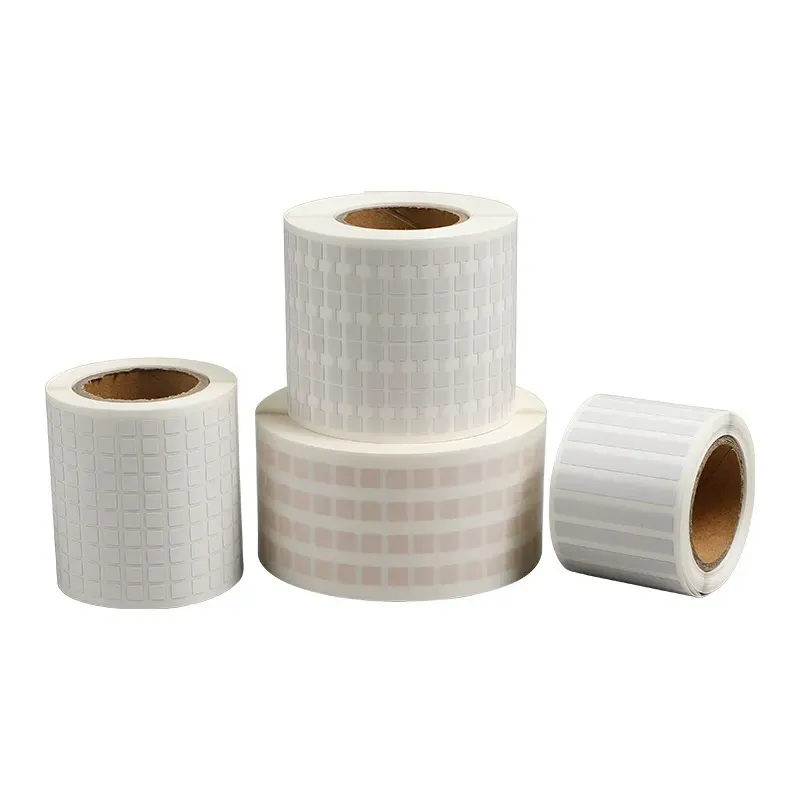
We supply polyimide labels in custom die-cut shapes, on rolls for automatic applicators, and in sheet form for benchtop use. Sizes range from tiny 5 mm x 5 mm squares for miniature PCBs to large format labels for backplanes and panels.
8. Get Your Free PI Label Sample Pack
The best way to validate performance is to test our materials on your boards, in your reflow oven, with your cleaning process. That’s why we provide complimentary sample packs tailored to your application.
✅ Request Your Free PI Label & Ribbon Sample Pack – Tell us your temperature profile, board surface, and printer model, and we’ll ship the ideal combination for you to test.
✅ Talk to an Electronics Label Specialist – Get a personalized recommendation and quote within one business day.
Don’t let a label failure compromise your traceability. Choose a polyimide labeling system engineered for the realities of reflow soldering.