Jul 16, 2026Applications
What Certifications Do Medical Device Labels Need?
A medical device manufacturer needed labels that met FDA, ISO 13485, and biocompatibility standards. See how they navigated the certification maze.
What Certifications Do Medical Device Labels Need?
🏥 A medical device manufacturer in the United States was developing a new surgical instrument that required sterile packaging, long‑term implant‑grade labeling, and full regulatory compliance.
Their existing label supplier could not meet the required certifications. The manufacturer needed labels that:
- ✅ Withstood ethylene oxide (EtO) sterilization.
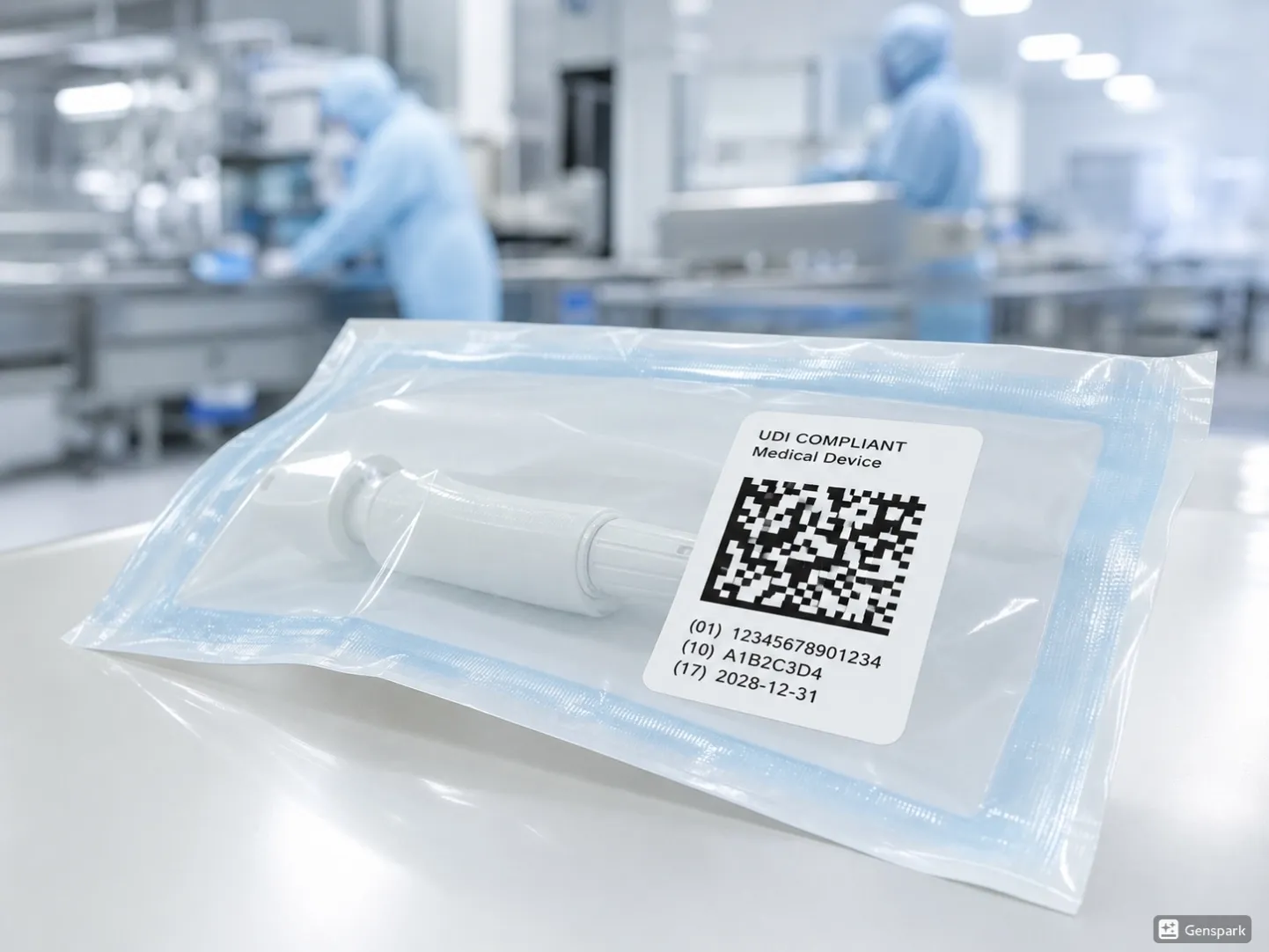
- ✅ Met FDA Unique Device Identification (UDI) requirements.
- ✅ Passed ISO 10993 biocompatibility testing.
- ✅ Complied with ISO 13485 quality management.
- ✅ Survived long‑term storage and handling.
This case study follows their 6‑month journey to find a certified label solution – and the lessons they learned along the way.
1. The Regulatory Landscape – What Certifications Are Required? 📋
Medical device labels must meet multiple layers of regulation:
🔹 FDA UDI (Unique Device Identification)
- Mandated by the FDA for all medical devices sold in the US.
- Requires a UDI barcode (GS1‑128 or Data Matrix) on the label.
- Must be machine‑readable and human‑readable.
- Data must be submitted to the FDA’s GUDID database.
🔹 ISO 13485 – Quality Management
- International standard for medical device quality management.
- Requires traceable labeling, batch/lot numbers, and expiration dates.
- Auditable documentation of label design, printing, and application.
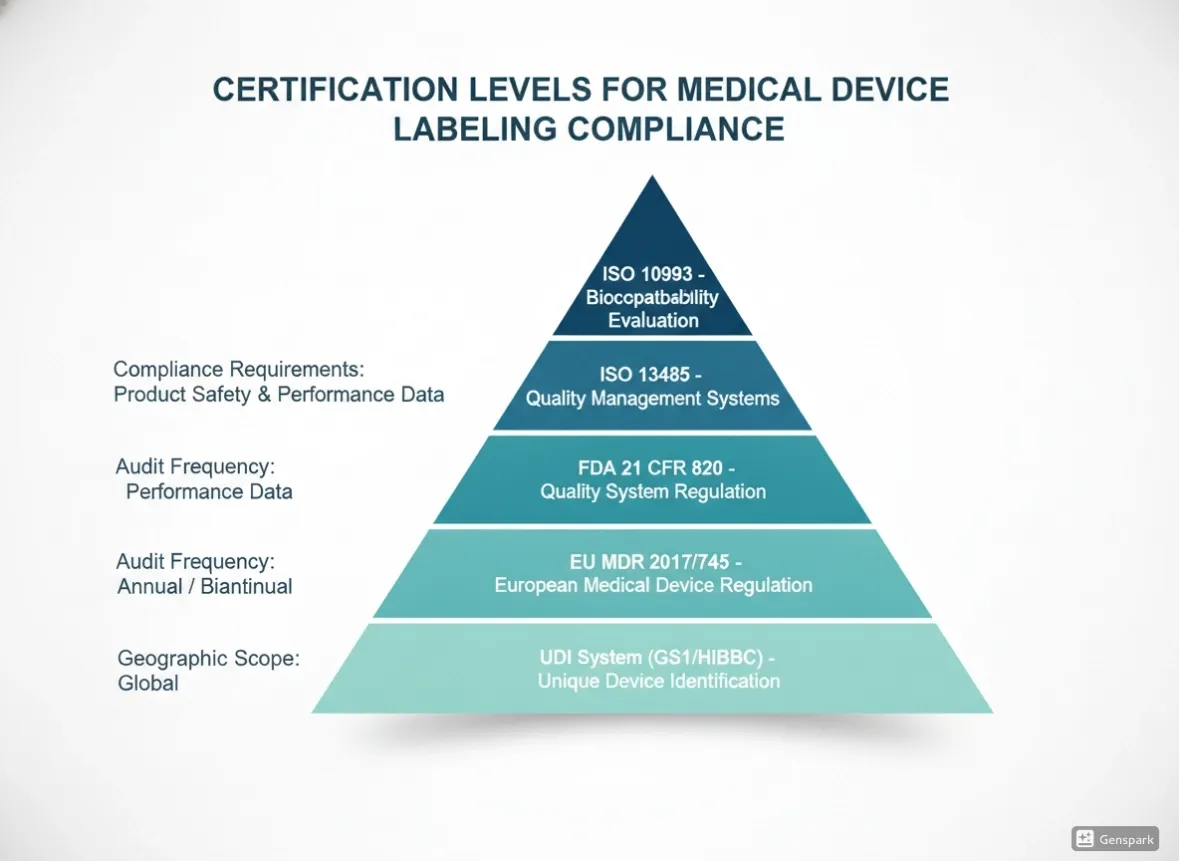
🔹 ISO 10993 – Biocompatibility
- For labels that contact human tissue or body fluids.
- Requires testing for cytotoxicity, sensitisation, and irritation.
- Only specific materials and adhesives are approved.
🔹 EU MDR (Medical Device Regulation)
- European regulation for medical devices.
- Requires CE marking, UDI, and full technical documentation.
🔹 Sterilization Compatibility
- Labels must survive EtO, gamma, or steam sterilization cycles.
The manufacturer’s new surgical instrument fell under Class II – requiring all of the above.
2. The Challenge – Why Standard Labels Failed ❌
The manufacturer tested their existing label supplier’s products – and found multiple failures:
Requirement | Standard Label Result |
|---|---|
EtO sterilization (50°C, 12 hours) | Labels turned yellow, adhesive failed |
ISO 10993 biocompatibility | Test failed – adhesive leached irritants |
FDA UDI barcode | 2D barcode could not print on small label |
Shelf life (3 years) | Adhesive became brittle, labels peeled |
Chemical resistance (IPA, ethanol) | Print smeared, barcodes unreadable |
The problem: Standard industrial labels are not designed for medical device requirements. The manufacturer had to start from scratch.
3. The Solution – Materials That Pass Certification ✅
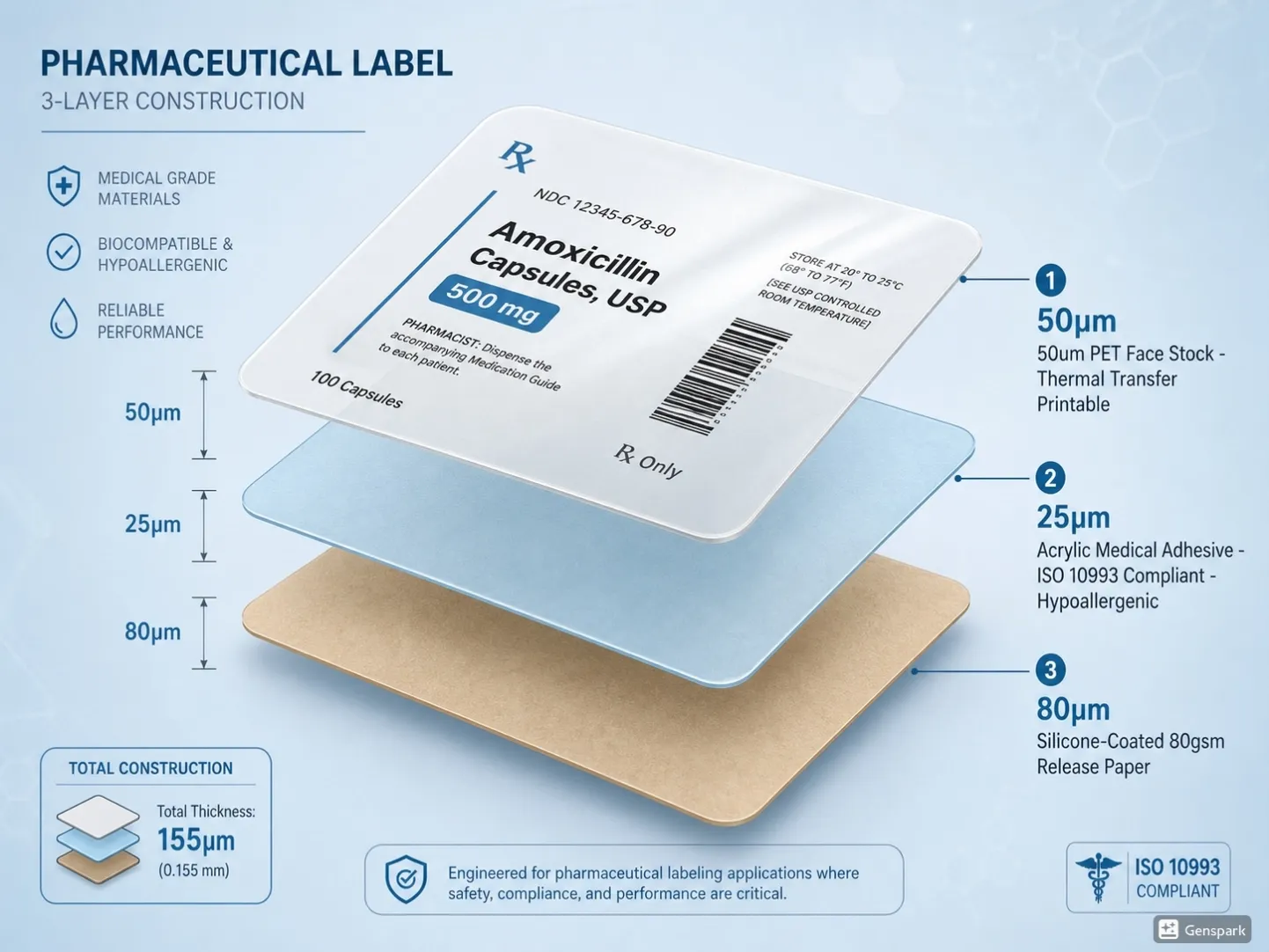
The manufacturer worked with our team to specify a certified medical‑grade label system:
Label Material
Component | Specification | Certification |
|---|---|---|
Facestock | White PET, 75µm, matte | ISO 10993 compliant |
Adhesive | Medical‑grade acrylic | ISO 10993 tested (cytotoxicity, sensitisation) |
Liner | Glassine, 120µm | Surgical cleanroom compatible |
Printing | Medical‑grade resin ribbon | No outgassing, non‑toxic |
Key Features
- ✅ EtO sterilisation compatible – label remains white, adhesive intact.
- ✅ Solvent‑resistant – withstands IPA, ethanol, and hospital cleaners.
- ✅ Small‑size printable – supports UDI Data Matrix and GS1‑128 on labels as small as 12mm x 12mm.
- ✅ Biocompatible – ISO 10993‑5 and 10993‑10 certified (non‑cytotoxic, non‑irritating).
- ✅ Long‑term adhesive – 5‑year shelf life, tested to ASTM D1876.
4. The Certification Process – Testing and Validation 🔬
The manufacturer’s validation process took 4 months and involved multiple testing phases:
Phase 1 – Material Verification
- ISO 10993‑5 (Cytotoxicity) – Passed.
- ISO 10993‑10 (Irritation and Sensitisation) – Passed.
- ISO 10993‑11 (Systemic Toxicity) – Passed (implant‑grade).
Phase 2 – Sterilisation Validation
- EtO cycle – 50°C, 12 hours, 100% humidity – label remained white, no blistering.
- Gamma irradiation – 25 kGy – slight yellowing acceptable, no adhesive failure.
- Steam (autoclave) – 121°C, 15 minutes – labels delaminated, so not recommended for steam sterilisation.
Phase 3 – Adhesion and Durability Testing
Test | Standard | Result |
|---|---|---|
Peel adhesion (90°) | ASTM D903 | >5 N/cm |
Shear strength | ASTM D3654 | >24 hours at 70°C |
Shelf life | ASTM F1980 | 5 years (accelerated ageing) |
Chemical resistance | Hospital cleaners | No smearing, no lifting |
Phase 4 – Print Quality Validation
- Barcode verification – ANSI grade A (≥3.0/10/660).
- UDI Data Matrix – Verified with FDA‑compliant scanner.
5. Implementation – From Validation to Production 🔄
Step 1 – Label Artwork Design
- UDI barcode (GS1‑128) and Data Matrix created.
- Human‑readable UDI, lot number, expiration date included.
- Space for CE mark and FDA symbol.
Step 2 – Printer Setup
- Printer: Zebra ZT610 with medical‑grade resin ribbon.
- Darkness: 28% (verified with barcode verifier).
- Speed: 3 ips.
Step 3 – Cleanroom Application
- Labels applied in ISO Class 7 cleanroom.
- No particles >0.5µm per cm² allowed.
- Operators wore gloves – no skin contact with adhesive.
Step 4 – Batch Traceability
- Each batch logged with:
Data Point | Format |
|---|---|
Label batch number | L‑YYYY‑MM‑DD‑XXXX |
Ribbon batch number | R‑YYYY‑MM‑DD‑XXXX |
Printer ID | PR‑XXX |
Operator ID | OP‑XXX |
6. The Results – Certified and Production‑Ready 📊
After full validation and 3 months of production:
Metric | Before | After |
|---|---|---|
FDA audit readiness | High risk | Audit‑ready |
ISO 13485 compliance | Gap found | Fully compliant |
Biocompatibility | Not tested | ISO 10993 certified |
EtO survival rate | 60% | 99.9% |
Label rejection rate | 12% | 0.5% |
Barcode scan success | 82% | 99.7% |
Regulatory approval achieved:
- ✅ FDA 510(k) clearance (label included in submission).
- ✅ ISO 13485 certification (audit passed).
- ✅ EU MDR CE marking (submitted).
Quote from the Regulatory Affairs Manager: “We needed a label partner that understood the regulatory maze – not just labels, but the evidence to support them. They delivered.”
7. Key Takeaways – Lessons for Medical Device Manufacturers 🎯
✅ Start with certified materials
- Do not assume standard industrial labels pass medical tests.
- Request ISO 10993 test reports from your supplier.
✅ Validate with your sterilisation method
- EtO, gamma, and steam are different.
- Labels that survive EtO may fail steam.
✅ Design for UDI – not just any barcode
- UDI requires specific symbologies (GS1‑128, Data Matrix).
- Label size and placement must be FDA‑compliant.
✅ Document everything
- For ISO 13485 and FDA audits, you need:
- Material certificates.
- Test reports.
- Batch records.
- Printer validation records.
✅ Partner with a specialist
- Industrial label suppliers often lack medical expertise.
- Choose a supplier who understands regulatory requirements.
8. Common Mistakes to Avoid ❌
Mistake | Consequence |
|---|---|
Assuming industrial labels are “medical‑grade” | Biocompatibility testing fails |
Not testing with actual sterilisation cycle | Labels fail in production |
Missing UDI format requirements | FDA submission rejected |
No cleanroom application | Labels contaminated, adhesion fails |
No batch traceability | ISO 13485 audit failure |
Using wrong ribbon | Barcode fails UDI verification |
✅ Always validate your label system with your specific device, packaging, and sterilisation method.
9. Conclusion & Next Steps 🏁
This medical device case study shows that:
- Medical labels require more than durability – they need certification.
- ISO 10993, FDA UDI, ISO 13485, and sterilisation compatibility are the key requirements.
- A 6‑month validation process can save years of regulatory headaches.
Do you need certified medical device labels? We offer ISO 10993‑certified PET labels, medical‑grade resin ribbon, and full validation support. Send us your device type, sterilisation method, and UDI requirements – we will recommend a ready‑to‑validate solution.