Jul 8, 2026Applications
How an Automotive Parts Supplier Chose the Right Labels for Oil Containers
An automotive supplier's oil bottle labels kept peeling and smearing. See how they tested and selected the right label material and ribbon combination.
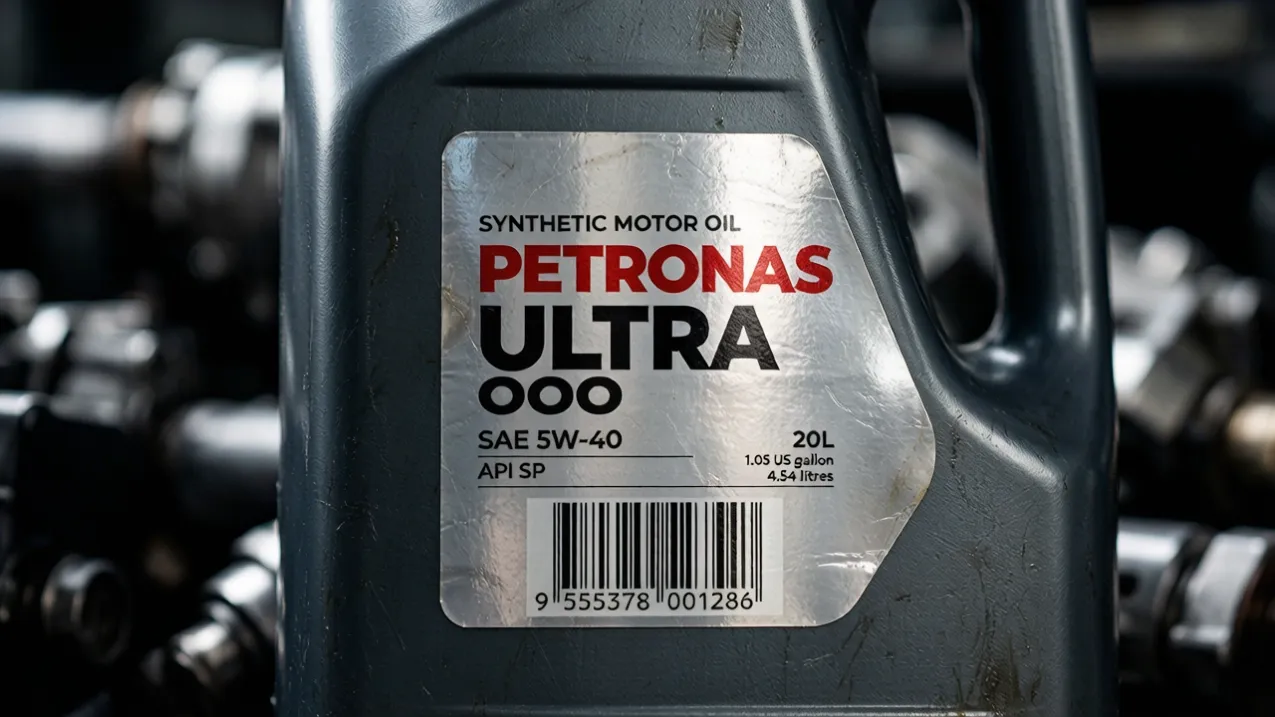
How an Automotive Parts Supplier Chose the Right Labels for Oil Containers
🏭 A tier‑2 automotive parts supplier in Germany manufactures engine oil, brake fluid, and coolant containers for several major car brands. Their production line fills and labels over 500,000 containers per month.
For years, they had a persistent problem: labels on oil bottles kept failing.
- ❌ Labels peeled off during handling.
- ❌ Barcodes smeared when oil spilled.
- ❌ Adhesive residue remained on containers after removal.
- ❌ Customers complained about unreadable labels.
This case study follows their 4‑month journey to find the right label solution – testing materials, adhesives, and ribbons to meet automotive industry requirements.
1. The Problem – Why Labels Failed on Oil Containers 🧪
Oil containers are one of the most challenging labeling surfaces:
- ❌ Surface contamination – bottles often have trace oil or grease from filling.
- ❌ Low surface energy – HDPE and PP plastics are difficult for adhesives to bond to.
- ❌ Oil exposure – spilled oil can penetrate labels and dissolve adhesives.
- ❌ Wide temperature range – from cold storage (5°C) to hot engine bays (120°C+).
- ❌ Handling – bottles are squeezed, stacked, and transported, causing label abrasion.
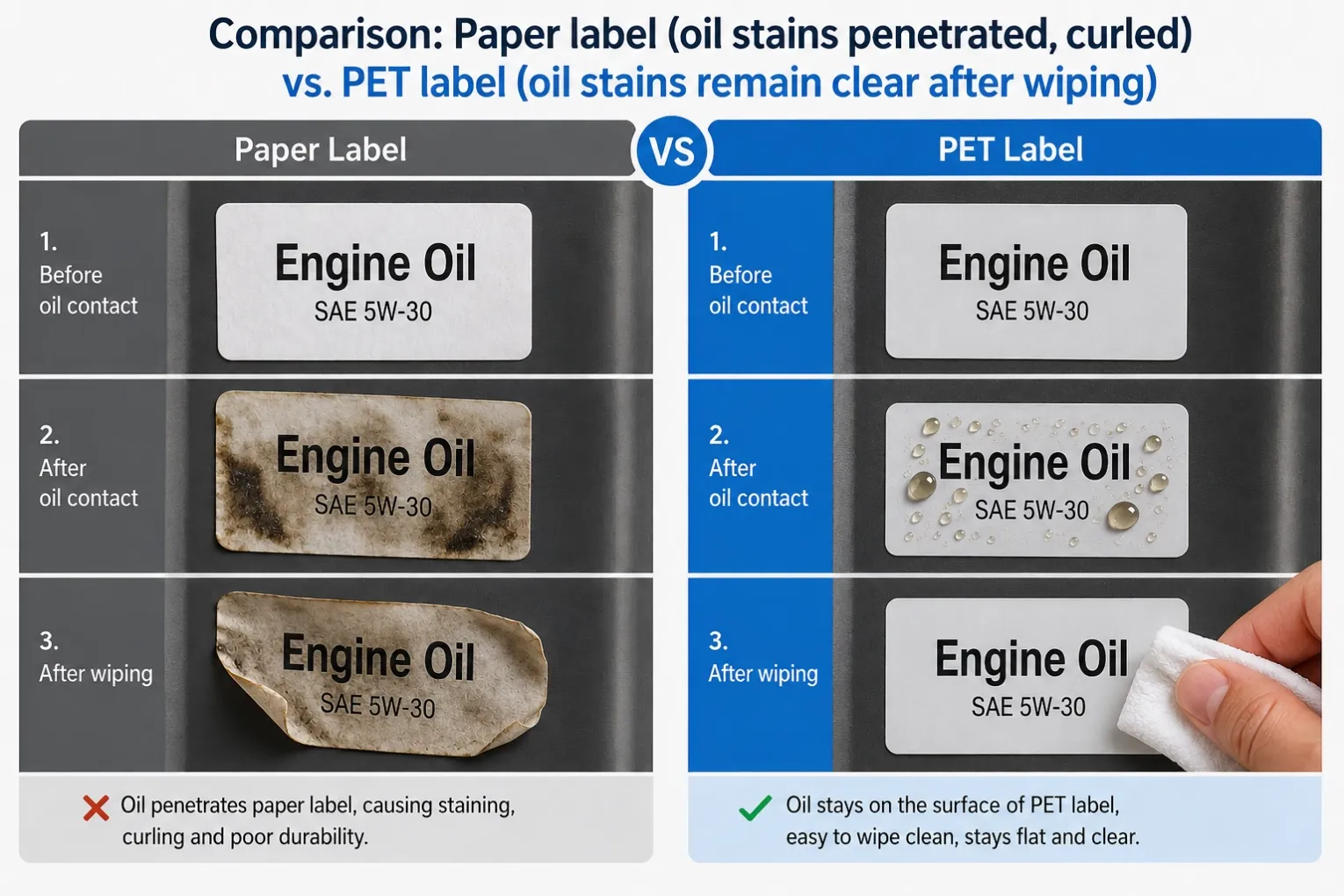
The supplier’s original label:
- Material: Standard paper with gloss coating
- Adhesive: General‑purpose acrylic
- Ribbon: Wax/resin
Result: Labels peeled, smeared, and faded. The rejection rate was 8% – meaning 40,000 containers per month needed relabeling or were scrapped.
2. The Requirements – Automotive Industry Standards 🚗
The supplier needed labels that met automotive industry requirements:
Requirement | Specification |
|---|---|
Oil resistance | Must withstand 24‑hour oil immersion (ASTM D471) |
Temperature range | -40°C to +120°C (storage to engine bay) |
Adhesion to HDPE/PP | High initial tack, permanent bond |
Smear resistance | Barcodes must remain scannable after oil contact |
Shelf life | Label must stay legible for 5+ years |
Compliance | RoHS, REACH, IMDS (International Material Data System) |
3. The Testing Process – Finding the Right Combination 🔬
The supplier tested 8 different label materials with 4 adhesive types and 3 ribbon types – a total of 96 combinations.
Test Protocol
Test | Condition | Duration | Pass/Fail |
|---|---|---|---|
Oil immersion | SAE 5W‑30 engine oil at 80°C | 24 hours | No peeling, no adhesive failure |
Solvent wipe | Brake fluid, coolant, gasoline | 10 rubs | No smearing, no fading |
Temperature cycling | -40°C to +120°C | 10 cycles | No cracking, no delamination |
Scratch test | Taber abrasion | 100 cycles | Barcode remains scannable |
Peel adhesion | 180° peel test (ASTM D903) | N/A | >4 N/cm |
Results – Top Performers
Material | Adhesive | Ribbon | Oil Resistance | Temp Cycling | Scratch | Overall |
|---|---|---|---|---|---|---|
Paper | General acrylic | Wax/resin | ❌ Fail | ❌ Fail | ❌ Fail | ❌ |
Paper | Oil‑resistant | Resin | ⚠️ Marginal | ❌ Fail | ❌ Fail | ❌ |
Standard PET | General acrylic | Resin | ⚠️ Marginal | ✅ Pass | ✅ Pass | ⚠️ |
Standard PET | Oil‑resistant | Resin | ✅ Pass | ✅ Pass | ✅ Pass | ✅ |
White PET | Oil‑resistant acrylic | Resin | ✅ Pass | ✅ Pass | ✅ Pass | ⭐⭐⭐⭐⭐ |
PI | Silicone | Resin | ✅ Pass | ✅ Pass | ✅ Pass | (Overkill) |
Winner: White PET + oil‑resistant acrylic adhesive + resin ribbon.
PI passed all tests but was 5× more expensive – unnecessary for this application.
4. The Solution – Specifications and Implementation 🛠️
Final Label Specifications
Component | Specification | Supplier |
|---|---|---|
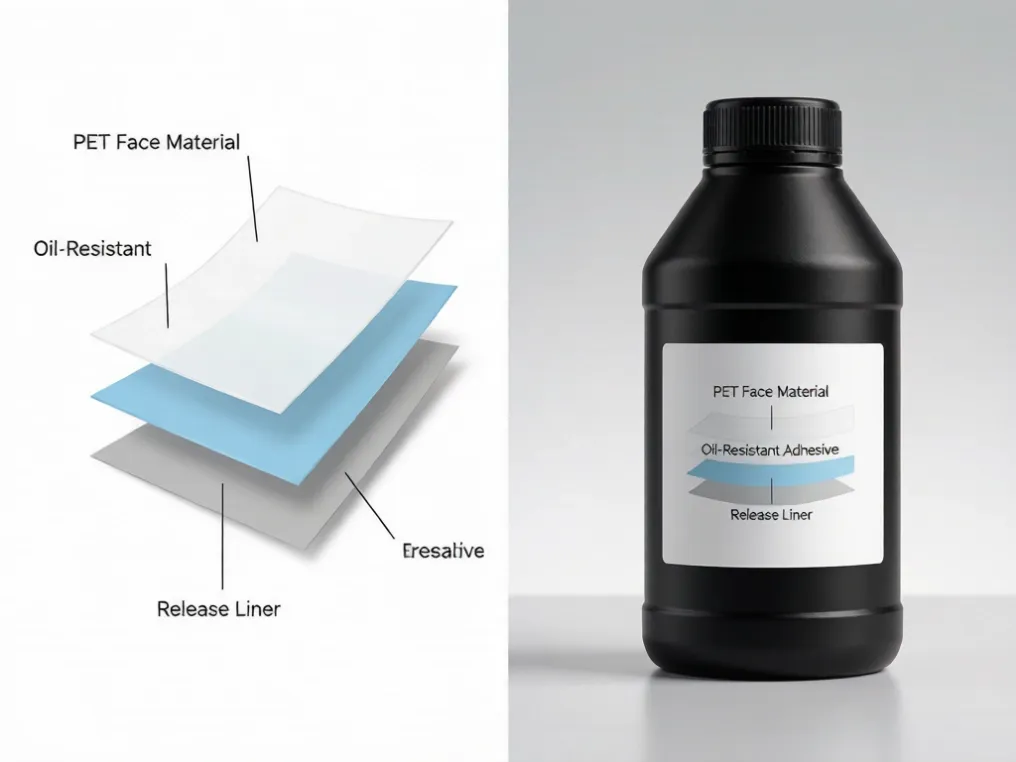
Facestock | White PET, 50µm, matte finish | Custom |
Adhesive | Oil‑resistant acrylic (high‑tack) | Custom |
Liner | 80µm glassine (for high‑speed applicator) | Custom |
Printing | Resin ribbon (cross‑linked) | Custom |
Application temperature | 10°C to 40°C | N/A |
The supplier also switched from manual to automated label application, reducing application errors.
Implementation Steps
- Surface cleaning – Bottles are cleaned with IPA before labeling (removes oil residue).
- Printer adjustment – Zebra ZT610 printer, darkness 28%, speed 3 ips.
- Application pressure – 5‑second pressure, 10 PSI.
- Quality check – 1% of labels peel‑tested per shift.
5. The Results – Before and After 📊
After 6 months of production with the new labels:
Metric | Before | After | Improvement |
|---|---|---|---|
Label rejection rate | 8% | 0.3% | 96% reduction |
Manual relabeling hours | 12 hours/week | 0.5 hours/week | 96% reduction |
Customer complaints | 15/month | 1/month | 93% reduction |
Scrap cost | $8,000/month | $300/month | 96% reduction |
Scanner first‑pass success | 85% | 99.8% | +14.8% |
Annual saving: Over $90,000 in reduced labor, scrap, and customer returns.
Quote from the Production Manager: “We finally have a label that survives our production line. No more stopping to relabel bottles – it’s saved us a full person’s worth of time.”
6. Key Learnings for Other Automotive Suppliers 🎯
✅ Choose PET over paper for oil containers
- PET is inherently oil‑ and solvent‑resistant.
- Paper absorbs oil and fails quickly.
✅ Use oil‑resistant adhesive – not standard acrylic
- Standard acrylic can soften or dissolve in oil.
- Oil‑resistant formulations maintain bond strength.
✅ Always print with resin ribbon
- Wax/resin smears with oil contact.
- Resin ribbon cross‑links, creating a chemical‑resistant print.
✅ Test with real fluids
- Lab tests (ASTM) are good, but real‑world oil and brake fluid have additives that can affect labels.
✅ Automate application
- Manual labeling introduces variation (pressure, placement).
- Automated applicators ensure consistency.
7. Common Mistakes to Avoid ❌
Mistake | Consequence |
|---|---|
Using paper labels on oil containers | Oil soaks in, labels peel |
Using general‑purpose adhesive | Adhesive softens, labels lift |
Using wax/resin ribbon | Print smears, barcodes unreadable |
Applying labels to oily surfaces | Adhesion fails immediately |
Skipping temperature testing | Labels crack in winter, melt in summer |
Not testing with actual oil | Lab tests may not match real‑world |
✅ Always test with your specific fluids and temperatures.
8. Alternative Options for Extreme Cases 🔧
In some automotive applications, oil resistance alone is not enough:
- High‑temperature engine labels (>150°C) → Use polyimide (PI) labels.
- Aggressive solvent exposure (brake fluid, gasoline) → Use chemical resistant labels.
- Ultra‑cold storage (-40°C or below) → Use cryogenic‑grade labels.
For this supplier, standard PET with oil‑resistant adhesive was the sweet spot – cost‑effective and reliable.
9. Conclusion & Next Steps 🏁
This automotive parts supplier case study shows:
- Paper labels fail on oil containers – PET is required.
- Oil‑resistant adhesive is essential for long‑term bond.
- Resin ribbon prevents smearing from oil and solvent contact.
- Switching to the right label combination reduced rejection rates from 8% to 0.3% and saved over $90,000 per year.
Does your automotive parts facility need better oil‑resistant labels? We offer free samples of oil‑resistant PET labels and matching resin ribbon. Send us your container type, fluids, and temperature range – we will recommend the right solution and send samples for you to test.