Aug 25, 2026Applications
Cable Identification – Why Choose PVC Labels for Wire and Cable Marking?
Organising hundreds of cables in a data centre or industrial facility is a challenge. Learn why flexible PVC labels are the preferred choice for durable, colour‑coded cable identification.
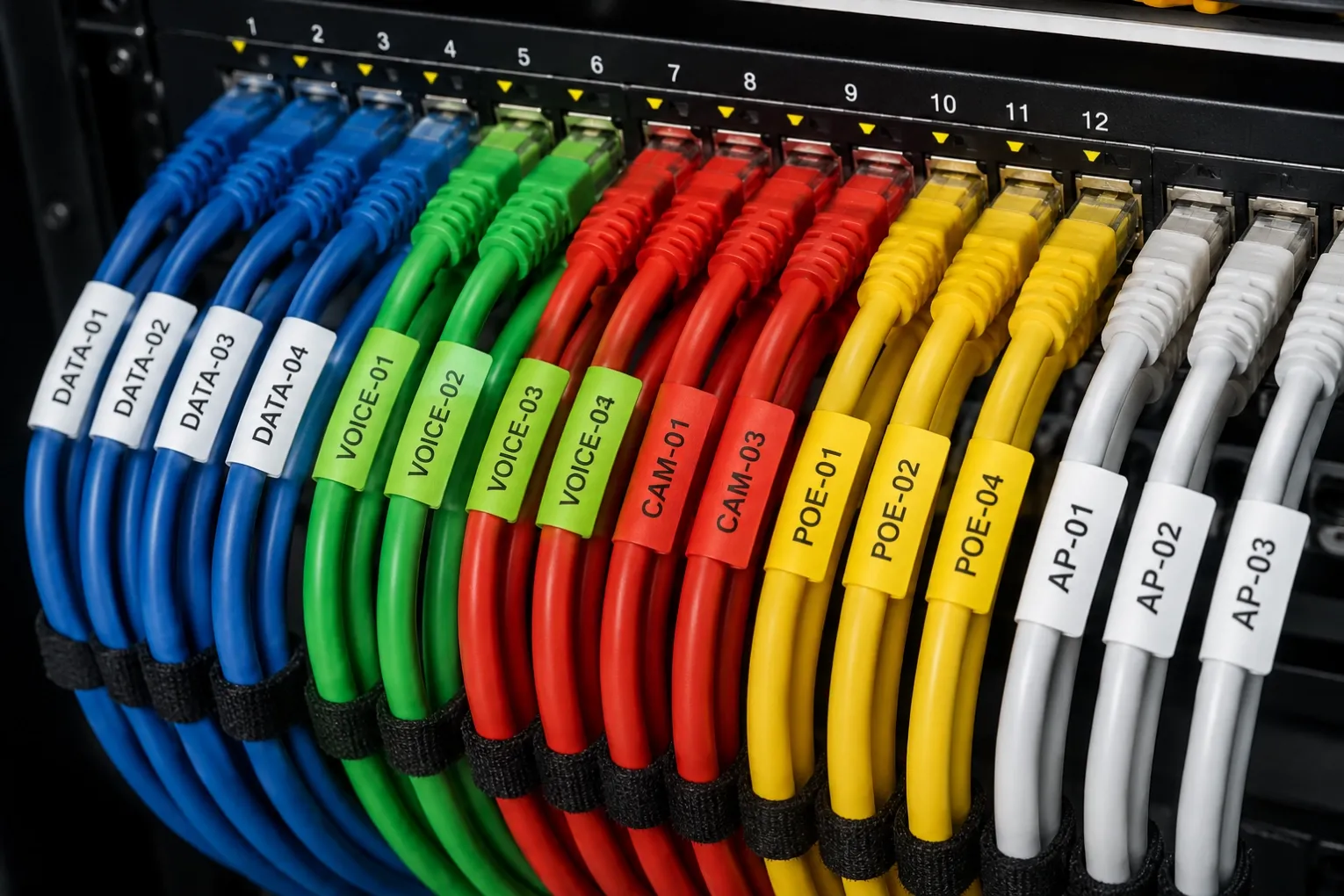
You walk into a data centre, an industrial control panel, or a telecommunications hub. Hundreds – sometimes thousands – of cables run in every direction. Some are power cables. Some are data cables. Some are fibre optics. Without clear identification, troubleshooting becomes a nightmare, maintenance takes hours longer than necessary, and simple mistakes can bring down entire systems.
Effective cable identification is not a luxury – it is a necessity. And the most widely used solution for this challenge is flexible PVC labels.
In this guide, I’ll explain why PVC labels are the go‑to choice for cable and wire marking, what makes them different from other label materials, and how to use them effectively in your facility.
1. The Cable Identification Challenge 🧩
Why Cables Are Hard to Label
Cables present a unique set of challenges for identification:
- Curved surfaces – Cables have small, round diameters. Labels must wrap around them without lifting or wrinkling.
- Tight spaces – In crowded cable trays or patch panels, labels must fit in minimal space.
- Constant handling – Cables are pulled, pushed, bent, and flexed – labels must survive this without peeling.
- Heat and friction – Cables can warm up and rub against each other – labels must stay legible.
- Varied environments – From clean data centres to dirty factory floors – labels must adapt.
The Consequences of Poor Labelling
A lack of clear cable identification leads to:
- ❌ Extended downtime during troubleshooting – technicians waste hours tracing cables
- ❌ Accidental disconnection of critical services
- ❌ Increased maintenance costs and labour time
- ❌ Safety risks when misidentifying power vs. data cables
- ❌ Inefficient audits and inspections
2. Why PVC Labels Are the Preferred Choice ✅
1. Exceptional Flexibility
PVC labels are soft and pliable. They conform easily to the curved surfaces of wires and cables, wrapping around them tightly without lifting at the edges. This is a critical advantage over rigid materials like PET, which tend to spring back.
Key advantage: PVC labels stay attached to cables even when flexed, moved, or bent.
2. Excellent Conformability
Not only do PVC labels wrap around cables, but they also conform to irregular surfaces. Whether the cable has a braided shield, a ribbed jacket, or an uneven diameter, a PVC label will mould to its shape.
3. Durability in Active Environments
Cables are handled frequently. PVC labels are:
- Resistant to abrasion and scratching – text and barcodes stay legible
- Resistant to moisture – unaffected by humidity or occasional spills
- Durable over time – maintain their adhesive bond through years of service
- UV stable – available in UV‑resistant formulations for outdoor applications
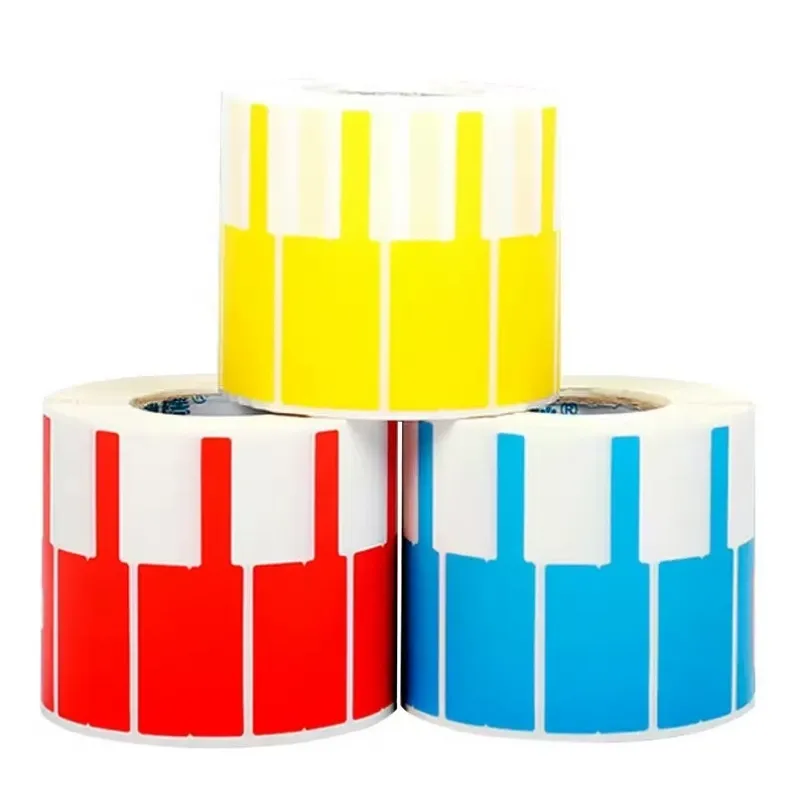
4. Colour‑Coding Capability
PVC labels are available in a wide range of colours – red, blue, yellow, green, orange, white, and more. This allows for intuitive colour‑coded cable identification:
- Red – Critical / power / fire
- Blue – Network / data
- Yellow – Safety / caution
- Green – Environmental / earth
- White – General purpose / custom
Key advantage: Color‑coded cables can be identified instantly – no reading required.
5. Low‑Temperature Performance
PVC remains flexible at low temperatures, down to -30°C. This makes PVC labels ideal for:
- Cold storage facilities
- Outdoor cable installations
- Refrigerated industrial environments
6. Cost‑Effectiveness
PVC labels are among the most affordable flexible label materials. For large‑scale cable identification projects – where thousands of cables need labelling – the cost advantage is significant.
3. PVC vs. PET – Which Is Better for Cable Identification?
Property | PVC Label | PET Label |
|---|---|---|
Flexibility | Excellent – soft, pliable | Rigid – may spring back |
Conformability | Excellent – moulds to irregular surfaces | Poor – cannot follow tight curves |
Temperature range | -30°C to +60°C | -20°C to +120°C |
Colour options | Wide range | Limited |
Print quality | Good | Excellent |
Durability | Good | Excellent |
Recyclability | Limited | Better |
Cost | $ | $$ |
The decision:
- ✅ Choose PVC for cable wraps, curved surfaces, and colour‑coded identification – where flexibility is the priority.
- ✅ Choose PET for high‑temperature environments (>60°C) or where mechanical strength is critical.
For cables that will be exposed to high temperatures or strong chemicals, PET or PI labels may be more suitable. However, for the vast majority of cable marking applications, PVC is the most practical and cost‑effective choice.
4. Key Applications – Where PVC Labels Are Used 🏗️
Data Centres & Server Rooms
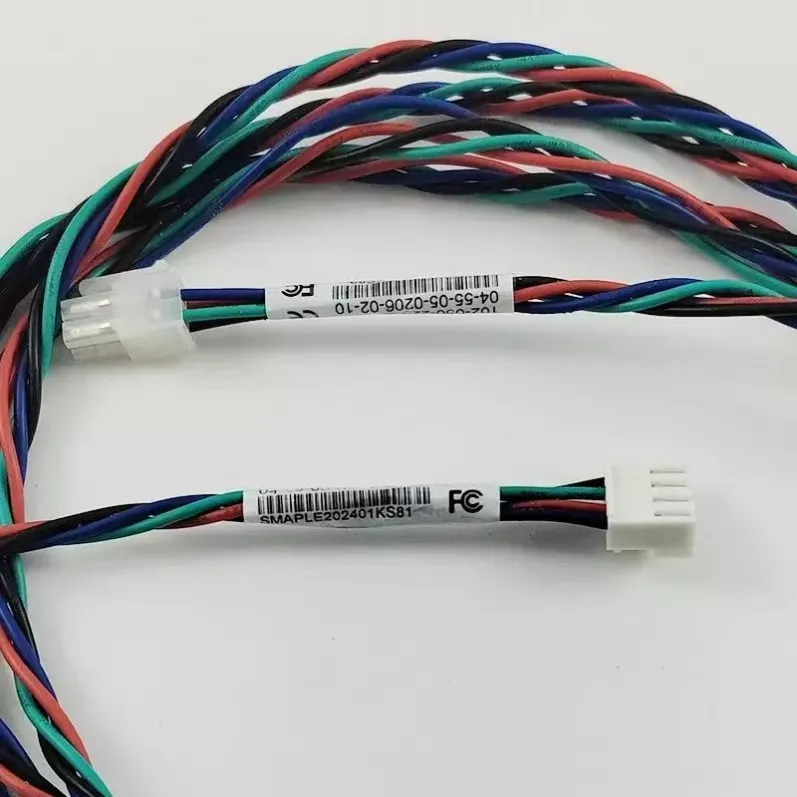
- Labelling network cables, fibre optic patches, and power cords.
- Colour‑coding different network segments (e.g., production, test, management).
- Quick identification for moves, adds, and changes (MACs).
Industrial Control Panels
- Labelling control wires inside electrical enclosures.
- Marking sensor cables, actuator wires, and bus communication lines.
- Enabling fast fault‑finding and maintenance.
Telecommunications (Telco)
- Labelling cables in switching centres, cell towers, and distribution cabinets.
- Marking fibre optic patch panels and copper jumper wires.
Manufacturing & Automation
- Labelling cables on robotic systems, conveyor belts, and assembly lines.
- Marking power supply cables and signal lines for easy replacement.
Aviation / Aerospace (Cabin & Avionics)
- Labelling wire harnesses for navigation, communication, and cabin systems.
Shipbuilding & Marine
- Labelling cables on vessels exposed to moisture, vibration, and salt spray.
Building & Construction
- Labelling electrical cables, fire alarm wiring, and communication lines in new builds and renovations.
5. How to Choose the Right PVC Cable Labels 🎯
1. Select the Right Width
Rule of thumb: The label width should be at least 2–3 times the cable diameter for a proper wrap.
Cable Diameter | Recommended Label Width |
|---|---|
< 2mm | 6–10mm |
2–5mm | 10–15mm |
5–10mm | 15–25mm |
10–20mm | 25–40mm |
> 20mm | 40–50mm (flag style recommended) |
2. Choose the Label Type
Label Type | Best for |
|---|---|
Wrap‑around | Standard cable identification – label wraps fully around cable |
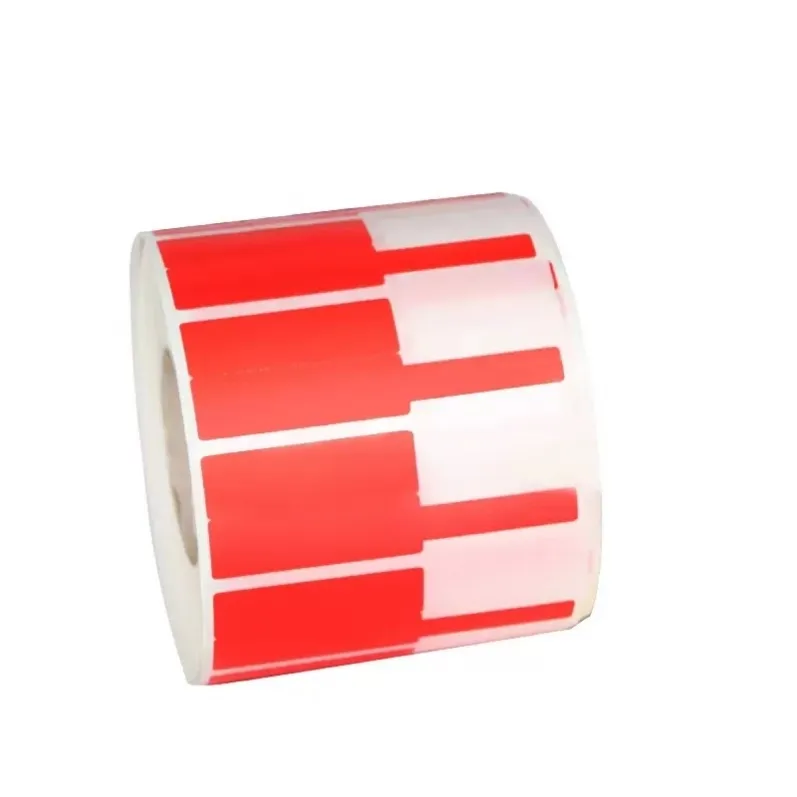
Flag style | Bundled cables – label extends like a flag for easy reading |
Booklet style | Multiple cables in a bundle – top‑side identification |
3. Pick the Right Colour
Application | Recommended Colour |
|---|---|
Critical / power cables | Red |
Network / data cables | Blue |
Safety / caution | Yellow |
Earth / grounding | Green |
General purpose | White |
Custom schemes | Any colour |
4. Consider the Environment
Environment | PVC Feature Required |
|---|---|
Clean indoor (data centre) | Standard PVC |
High humidity / outdoor | UV‑stabilised PVC |
Cold storage / freezer | Low‑temperature PVC |
Oil / chemical exposure | Laminated PVC or PET |
5. Select the Appropriate Ribbon
- Wax/Resin ribbon – Good for indoor cable labels, cost‑effective, decent scratch resistance
- Resin ribbon – Required for maximum durability, outdoor use, or chemical resistance
6. How to Apply PVC Cable Labels – Best Practices 🛠️
Step 1: Clean the cable surface
- Remove dust, grease, and moisture with a cleaning wipe or IPA.
- A clean surface ensures maximum adhesive bonding.
Step 2: Print the label
- Use a thermal transfer printer with the correct ribbon type.
- Ensure sufficient darkness for barcode contrast (barcode verifier recommended).
Step 3: Apply the label
- For wrap‑around labels: Start at one end, wrap firmly around cable.
- For flag labels: Fold label in half over cable, adhesive‑to‑adhesive at the flag tip.
Step 4: Press firmly
- Apply pressure for 3–5 seconds to ensure full adhesive contact.
- For cold environments, warm the cable and label before application.
Step 5: Allow to set
- Adhesive bonds fully over 24 hours at room temperature.
- Avoid stressing the label immediately after application.
7. Sustainability Considerations 🌍
PVC contains chlorine and is restricted in some markets (EU, California). If your products will be sold in these regions, verify compliance before ordering.
Alternatives for eco‑conscious buyers:
- ✅ PP (polypropylene) labels – 100% recyclable, flexible, compliant in all markets
- ✅ PE (polyethylene) labels – Flexible, recyclable alternative
We offer PP synthetic labels as a fully compliant, recyclable alternative for cable identification – with comparable flexibility to PVC.
8. Common Mistakes to Avoid ❌
Mistake | Consequence |
|---|---|
Choosing labels narrower than required | Label does not fully wrap – edges lift |
Applying labels to dirty or oily surfaces | Labels fall off within days |
Using wrong ribbon type | Print smears, barcodes illegible |
Not allowing label to set before handling | Adhesive bond weakens |
Skipping environmental compatibility testing | Labels fail in cold, heat, or moisture |
✅ Always test a sample label in your actual environment before full deployment.
9. Conclusion & Next Steps 🎯
- PVC labels are the preferred choice for cable identification because of their flexibility, conformability, colour variety, and cost‑effectiveness.
- They are ideal for data centres, industrial panels, telecommunications, manufacturing, and construction.
- Choose the right width, type, and colour for your specific cable size and application.
- Use the correct ribbon and apply labels to clean surfaces with firm pressure.
Need PVC cable labels for your facility? We offer flexible PVC labels in multiple colours and sizes – plus matching ribbons for thermal transfer printing. Send us your cable types, environment, and colour scheme requirements – we'll recommend the right labels and send free samples for you to test.